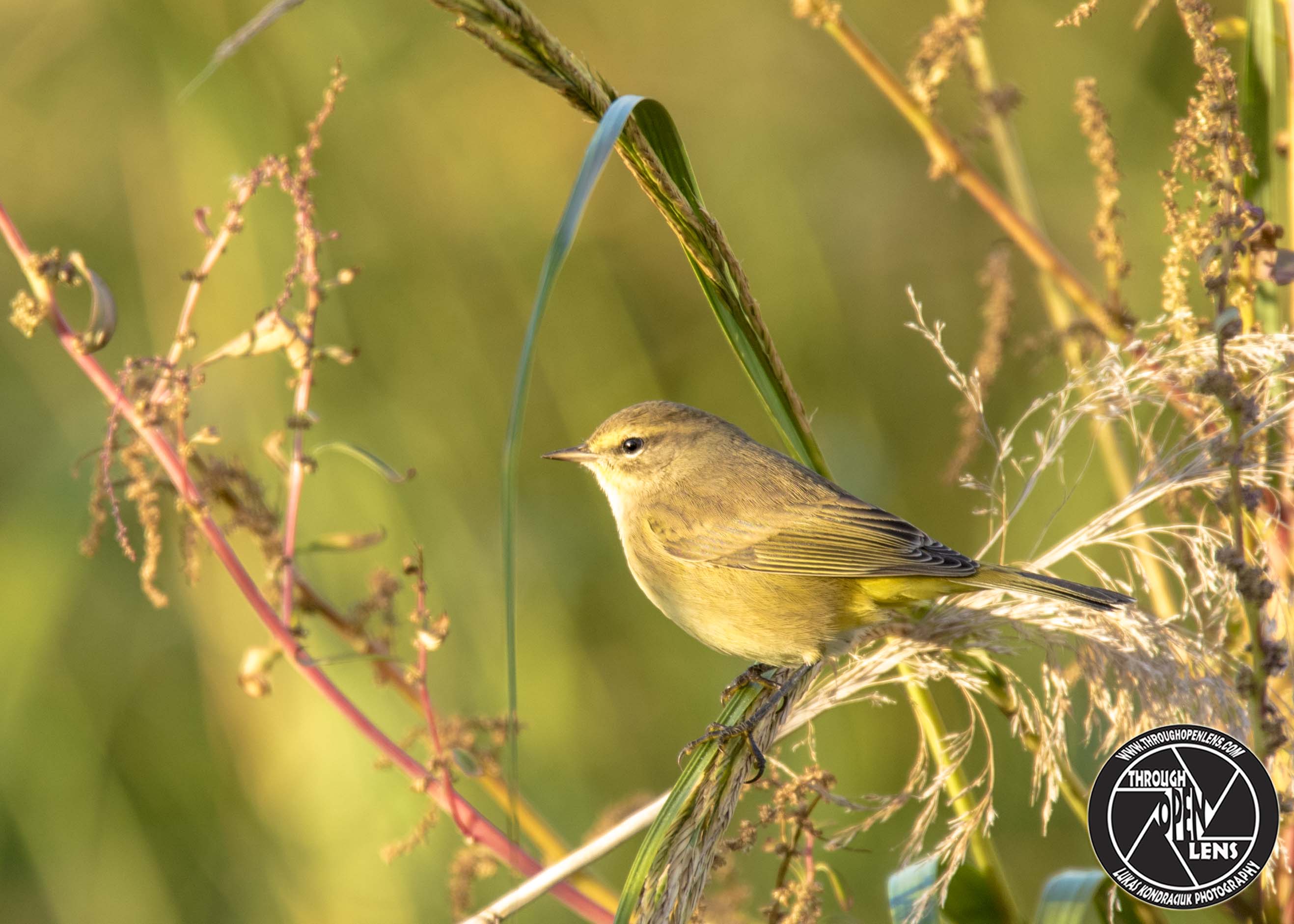
When You’re Thinking That I’m Thinking Of You, I’m Thinking You’re Thinking Of Me.

F/7.1, 1/200, ISO 320.

Yellow-Rumped Warbler

An invisible man marries an invisible woman.

The kids were nothing to look at either.

Interesting Fact: Females build the nest, sometimes using material the male carries to her. The nest is a cup of twigs, pine needles, grasses, and rootlets. She may also use moose, horse, and deer hair, moss, and lichens. She lines this cup with fine hair and feathers, sometimes woven into the nest in such a way that they curl up and over the eggs. The nest takes about 10 days to build. It’s 3-4 inches across and about 2 inches tall when finished. ( https://www.allaboutbirds.org/guide/Yellow-rumped_Warbler/lifehistory )

Ain’t No Thang Like A Duck Wing!

F/8.0, 1/250, ISO 200.

American Black Duck

Why did the Skeleton go to the movies by himself?

He had no body to go with him.

Interesting Fact:  Pleistocene fossils of American Black Ducks, at least 11,000 years old, have been unearthed in Florida and Georgia. ( https://www.allaboutbirds.org/guide/American_Black_Duck/lifehistory  )

Don’t Act Like You’re Not Impressed

F/11.0, 1/500, ISO 400.

Boston Terriers

What did the dog say to the hot dog bun?

“Are you pure bred?”

Interesting Fact: Judge weighed over 27.5 pounds (12.5 kg). The offspring interbred with one or more French Bulldogs, providing the foundation for the Boston Terrier. Bred down in size from fighting dogs of the Bull and Terrier types, the Boston Terrier originally weighed up to 44 pounds (20 kg) (Olde Boston Bulldogge).[2] The breed was first shown in Boston in 1870. By 1889 the breed had become sufficiently popular in Boston that fanciers formed the American Bull Terrier Club, the breed’s nickname, “roundheads”. Shortly after, at the suggestion of James Watson (a noted writer and authority), the club changed its name to the Boston Terrier Club and in 1893 it was admitted to membership in the American Kennel Club, thus making it the first US breed to be recognized.[8] It is one of a small number of breeds to have originated in the United States. The Boston Terrier was the first non-sporting dog bred in the US. ( https://en.m.wikipedia.org/wiki/Boston_Terrier )

Gone Fishing!

F/11.0, 1/500, ISO 125.

Osprey

What did the fish say when he posted bail?

“I’m off the hook!”

Interesting Fact:  The Osprey is the only hawk on the continent that eats almost exclusively live fish. In North America, more than 80 species of live fresh- and saltwater fish account for 99 percent of the Osprey’s diet. Captured fish usually measure about 6–13 inches in length and weigh one-third to two-thirds of a pound. The largest catch on record weighed about 2.5 pounds.  (  https://www.allaboutbirds.org/guide/Osprey/lifehistory )

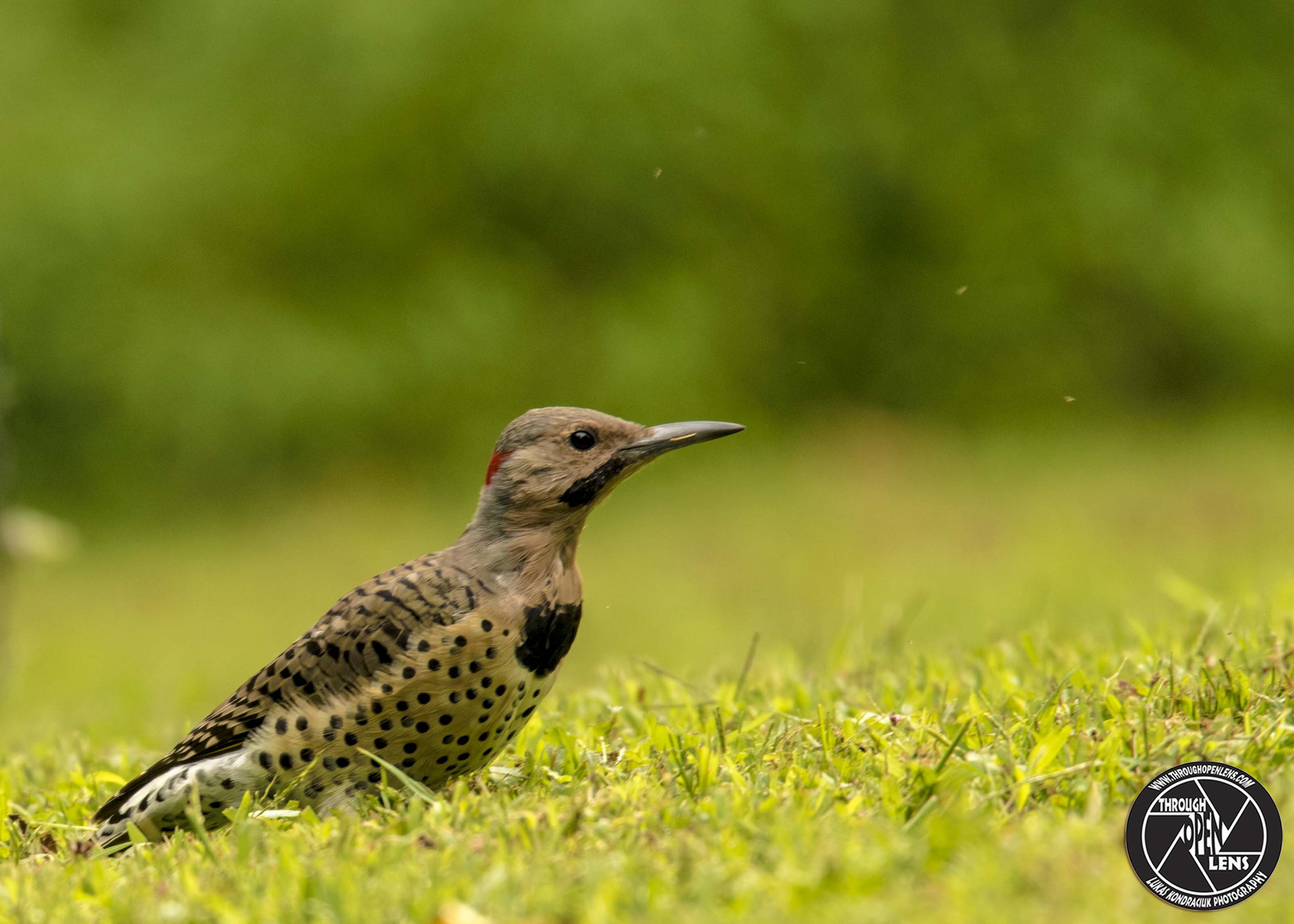
PLEASE KEEP ON THE GRASS! LIE DOWN! ROLL AROUND IN IT! FORGET ALL YOUR RESPONSIBILITES!

F/7.1, 1/200, ISO 400.

Northern Flicker

What do you call a Happy Cowboy?

A Jolly Rancher

Interesting Fact: Northern Flickers don’t act like typical woodpeckers. They mainly forage on the ground, sometimes among sparrows and blackbirds. When flushed, flickers often perch erect on thin horizontal branches rather than hitching up or around a tree trunk. Flickers do fly Iike most woodpeckers do, rising and falling smoothly as they intersperse periods of flapping with gliding. ( https://www.allaboutbirds.org/guide/Northern_Flicker/lifehistory )

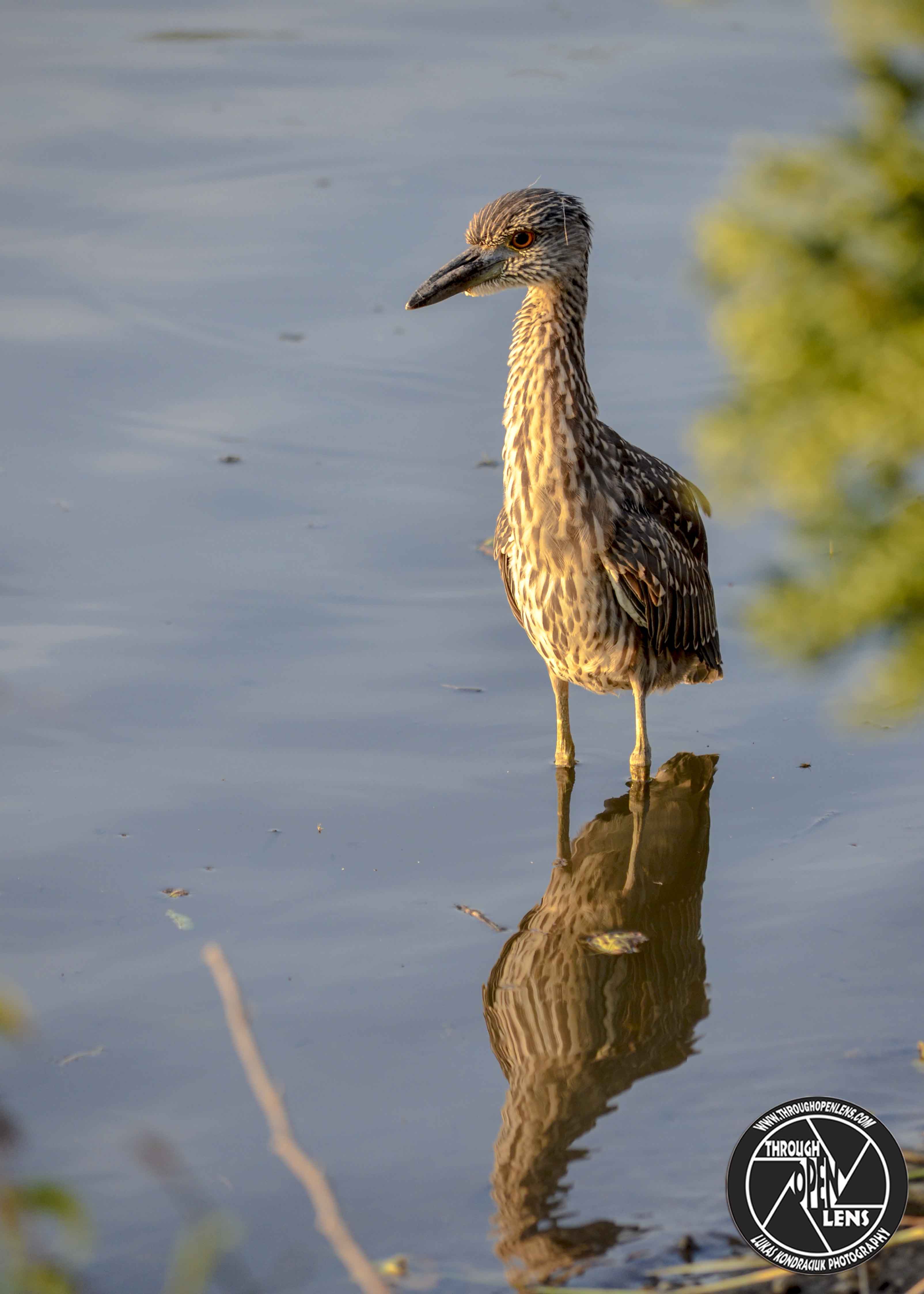
You Are Young. So Shut Up, And Enjoy Life.

F/5.6, 1/500, ISO 400.

Yellow-crowned Night-Heron ( Juvenile ) 

Why was the baby strawberry crying?

Because her mom and dad were in a jam

Interesting Fact: Foraging birds stand still or slowly stalk crabs and other prey along shorelines, marshes, and fields. Once in striking range they lunge at their prey and seize it in their bill. They swallow small prey whole, but often shake apart, crush, or spear larger prey. They forage on their own, typically keeping other individuals at a distance of 15 feet or more. Courting Yellow-crowned Night-Herons make display flights around their colonies, sometimes with the neck conspicuously extended. Courting pairs make a neck-stretching display, slowly raising and then quickly pushing the head back between its shoulders, while fanning the long shoulder plumes. Males do this first and females sometimes follow. ( https://www.allaboutbirds.org/guide/Yellow-crowned_Night-Heron )

Sunshine Is My Favorite Accessory!

F/8.0, 1/250, ISO 100.

California Sea Lion 

What did E.T.’s mother say to him when he got home?

Where on Earth have you been?

Interesting Fact: The sea lion’s ancient ancestors, like those of whales and dolphins, lived on land. The modern animal is well adapted to an aquatic environment, with its streamlined body and powerful flippers. (The rear flippers rotate forward to allow a California sea lion to move surprisingly well on land.) California sea lions also boast thick layers of blubber to insulate their bodies from the chill of marine waters. ( https://www.nationalgeographic.com/animals/mammals/c/california-sea-lion/ )


I’m So Crabby!

F/8.0, 1/640, ISO 100.

Atlantic Ghost Crabs

Did you hear about the crab that went to the seafood disco?

He pulled a muscle

Interesting Fact: Contrary to what many think, these creatures cannot swim in water. However, female crabs can keep themselves afloat by turning upside down in water. This is done to let the egg mass under their abdomen respire freely. ( http://www.animalspot.net/ghost-crab-sand-crab.html )

Hey Go Nuts Today!

F/6.3, 1/640, ISO 200.

Eastern Gray Squirrel

Why do squirrels swim on their backs?

To keep their nuts dry.


Interesting Fact: Squirrels are extremely intelligent creatures. They are known to put on elaborate bogus food burying displays to deceive onlookers. The fake burials are to trick potential thieves, such as other squirrels or birds, into thinking that they have stored their food stock there. Any observers planning on taking the stash will then focus on the bogus burial site, allowing the squirrel to bury the real stash elsewhere safely ( http://www.onekind.org/be_inspired/animals_a_z/squirrel/ )


It’s Not Easy Being Green

F/6.3, 1/60, ISO 640.

Northern Green Frog

What’s the difference between a cat and a frog?

A Cat has nine lives but a Frog croaks every night!

Interesting Fact:  The northern green frog (Lithobates clamitans melanota[2]) is a subspecies of the green frog, Lithobates clamitans. It is native to the northeastern North America and has been introduced to British Columbia.[3] Its mating call sounds like the single note of a plucked banjo. It is also quite common in the pet trade. ( https://en.wikipedia.org/wiki/Northern_green_frog )