But Officer, I’ve Never Been Able To Walk A Straight Line.

F/5.6, 1/280, ISO 500.

Atlantic Ghost Crab

Why is there only one Yogi Bear?

Because when they tried to make another one, they made a Boo-Boo.

Interesting Fact: Crabs of this species usually engage in a combat that is non-contact. The combat style is more ritualistic in style and ends in contact in very rare cases. ( https://www.animalspot.net/ghost-crab-sand-crab.html )


I Am Going Green!

F/6.3, 1/125, ISO 320.

American Wigeon

A man takes his dog to the vet.

“My dog is cross-eyed, is there anything you can do for him?”

“Well,” said the vet, “let’s have a look at him” So he picks the dog up and examines his eyes, then he checks his teeth.

Finally, he says, “I’m going to have to put him down.”

“What? Because he’s cross-eyed?”

“No, because he’s really heavy”.

Interesting Fact: The American Wigeon is a rare, but regular straggler to Europe where it turns up in flocks of Eurasian Wigeon. ( https://www.allaboutbirds.org/guide/American_Wigeon/lifehistory ).

Don’t Be Afraid To Stick Your Neck Out!

F/9.0, 1/320, ISO 100.

Mute Swan

What did one potato chip say to the other?

Shall we go for a dip?

Interesting Fact: Short legs placed well back on the body give Mute Swans an awkward walking gait, but the birds can run quickly if pursued and can take off from land and water, flying with head and neck extended. On the water they sometimes hold their wings slightly raised and “sail” with the wind. Mute Swans are predominantly monogamous and form long-lasting breeding pairs. They are extremely aggressive in defending their breeding territory. ( https://www.allaboutbirds.org/guide/Mute_Swan/lifehistory )

I Forgot My Swimsuit!

F/5.6, 1/500, ISO 200.

Horned Grebe

What do you get when you’re on you hands and knees?

You get very dirty.

Interesting Fact: A sleeping or resting Horned Grebe puts its neck on its back with its head off to one side and facing forward. It keeps one foot tucked up under a wing and uses the other one to maneuver in the water. Having one foot up under a wing makes it float with one “high” side and one “low” side. (https://www.allaboutbirds.org/guide/Horned_Grebe/overview# ).


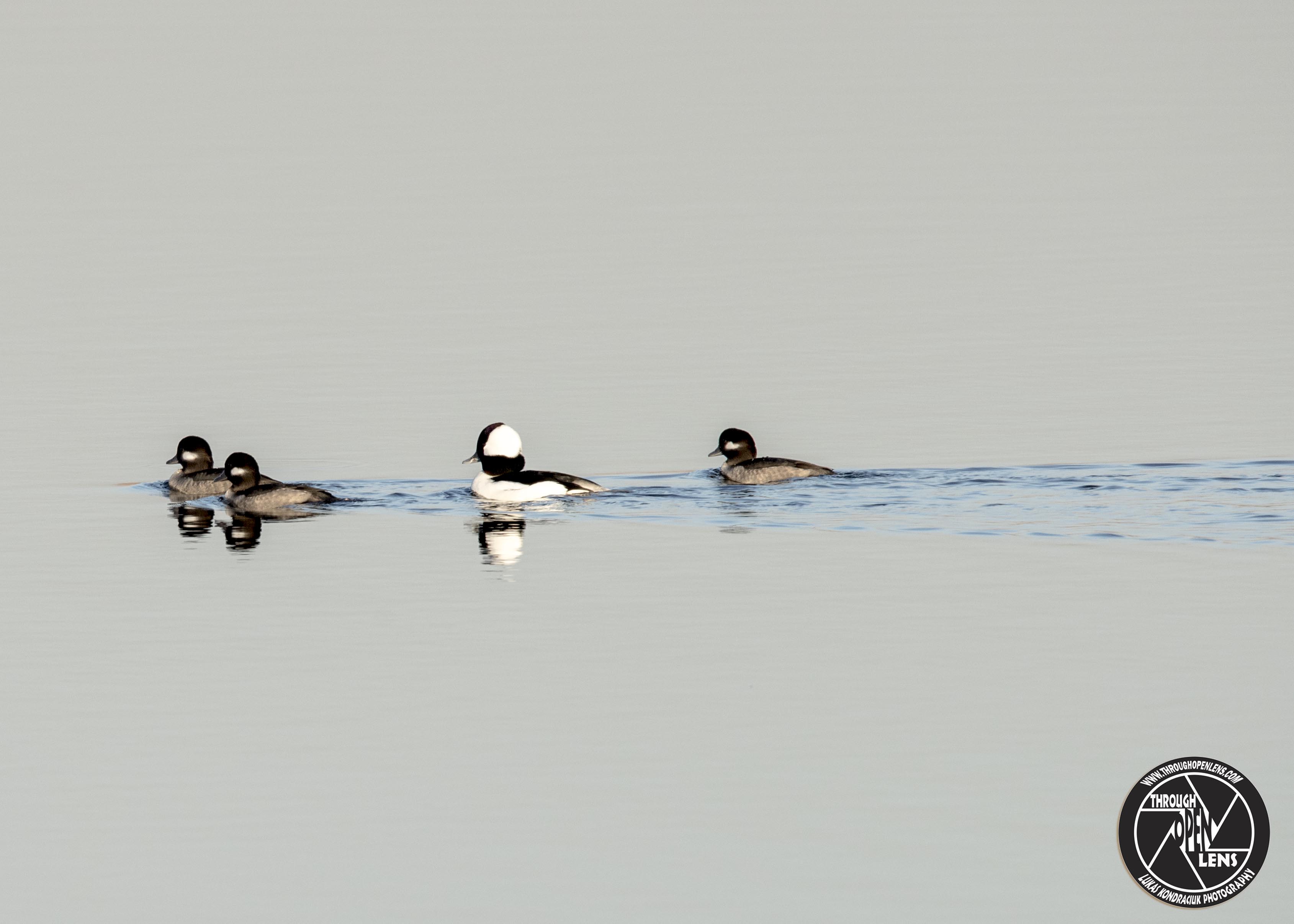
That Is How I Roll!

F/10.0, 1/400, ISO 400.

Bufflehead Ducks

What happened when the lion ate the comedian?

He felt funny!

Interesting Fact: When a pair of Buffleheads intrudes into a nearby territory, the male that owns the territory often chases the intruding female and her mate follows them in hot pursuit. Males leave their mates during incubation in order to molt, but return to the same mate multiple years in a row (one of the few duck species in which this is true). ( https://www.allaboutbirds.org/guide/Bufflehead/lifehistory )


Let’s Dance!

F/10.0, 1/400, ISO 320.

Greater Yellowlegs & Green-Winged Teal Duck ( Female ) 

Why did the Vampire get fired from the Blood Bank?

He was caught drinking on the job.

Interesting Fact: The Greater Yellowlegs walks with a distinctive high-stepping gait across wetlands when foraging, occasionally dashing forward in pursuit of a prey item. Compared to other shorebirds, the Greater Yellowlegs is often rather solitary. ( https://www.allaboutbirds.org/guide/Greater_Yellowlegs/lifehistory )


I’m Feeling A Little Froggy!

F/6.3, 1/50, ISO 500.

Southern Leopard Frog

Want to hear a dirty joke?

The white horse fell in the mud.

Interesting Fact: This frog lives in many types of shallow freshwater habitat and sometimes in slightly brackish water. It is usually found close to water but it can stay on dry land for long periods of time.[8] During warmer months it moves away from the water for most of the time.[10] It is mostly nocturnal,[10] but it can be active during the day and the night, especially during rainfall. It breeds in the winter and spring, and sometimes in the fall; heavy periods of rainfall trigger breeding.[8] The egg mass is connected to aquatic vegetation.[9] It typically nests communally in cooler weather, and individually in warmer weather.[11][12] Eggs hatch in 4 days to nearly two weeks.[10] The tadpoles take 50 to 75 days to develop to adulthood. ( https://en.wikipedia.org/wiki/Southern_leopard_frog )

I Chill Harder Than You Party!

F/ 6.3, 1/60, ISO 320.

Wood Duck

What are those things you blow on and make wishes?

Breathalyzers

Interesting Fact: They are strong fliers and can reach speeds of 30 mph. Wood Ducks are not territorial, with the exception that a male may fight off other males that approach his mate too closely.  ( https://www.allaboutbirds.org/guide/Wood_Duck/lifehistory )

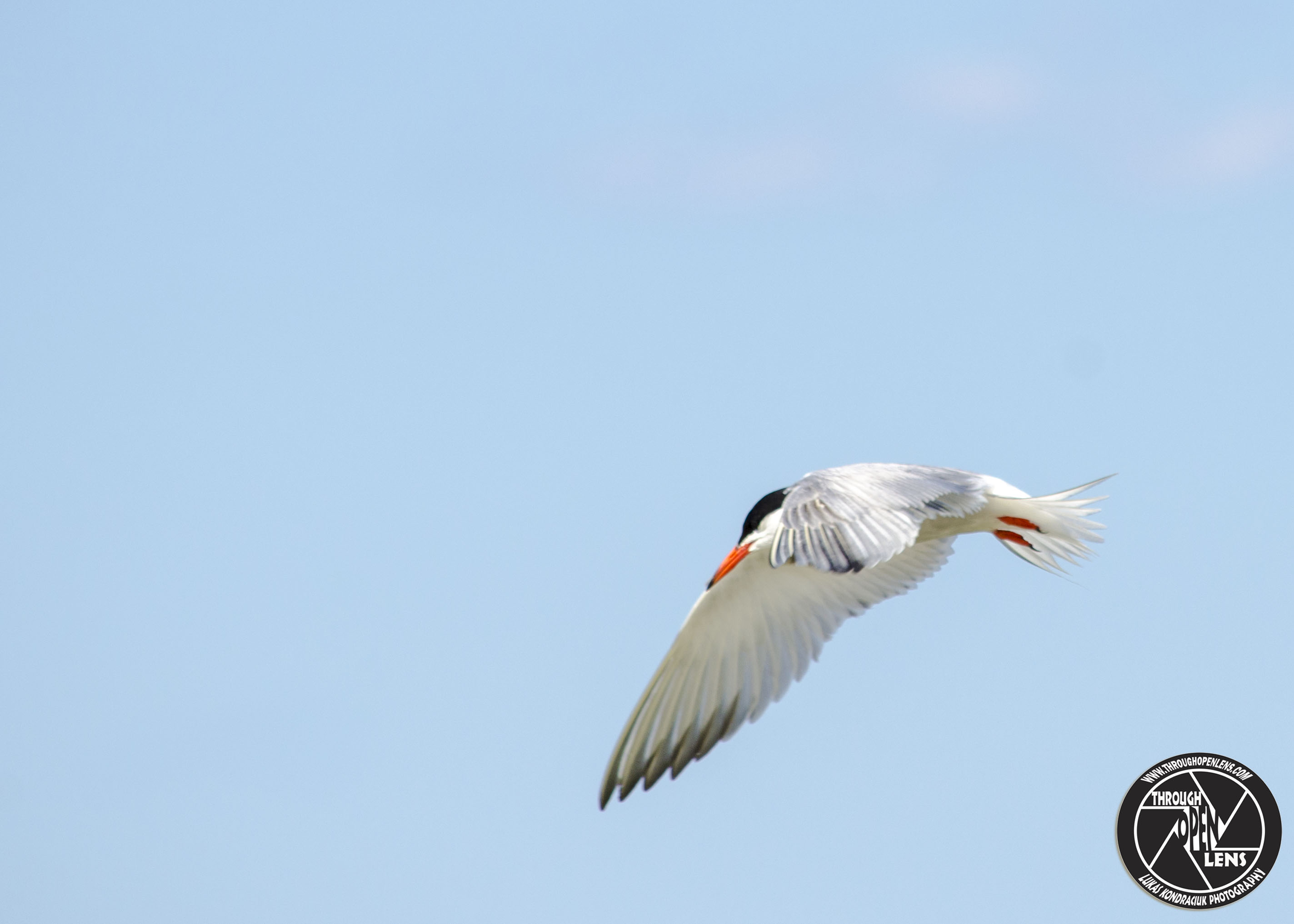
F.L.Y. ( First Love Yourself )

F/7.1, 1/800, ISO 200.

Common Tern

Why do you always see teen girls in groups of three?

Because they literally can’t even.

Interesting Fact: Males and females make a small scrape on the ground. Females add dead vegetation that has washed onshore, shell fragments, bones, stones, and sometimes plastic to the nest scrape before and after laying eggs.  ( https://www.allaboutbirds.org/guide/Common_Tern/lifehistory )


Quack Like You Mean It!

F/14.0, 1/500, ISO 800.

Black Scoter

This guy went to school and he asked
“May I use the bathroom?”
The teacher replied, ” no not unless you say your abc’s.”
The guy said “a b c d e f g h i j k l m n o q r s t u v w x y z.”
The teacher asked “Where’s the p?
He replied, ” running down my leg!”

Interesting Fact:  The Black Scoter occasionally does a “Wing-flap” display while swimming, flapping its wings with its body held up out of the water. Unlike other scoters, it almost always punctuates a Wing-flap with a characteristic downward thrust of head, as if its neck were momentarily broken. Surf and White-winged scoters keep their heads and bills pointing more or less above the horizontal throughout a Wing-flap.  ( https://www.allaboutbirds.org/guide/Black_Scoter/lifehistory )