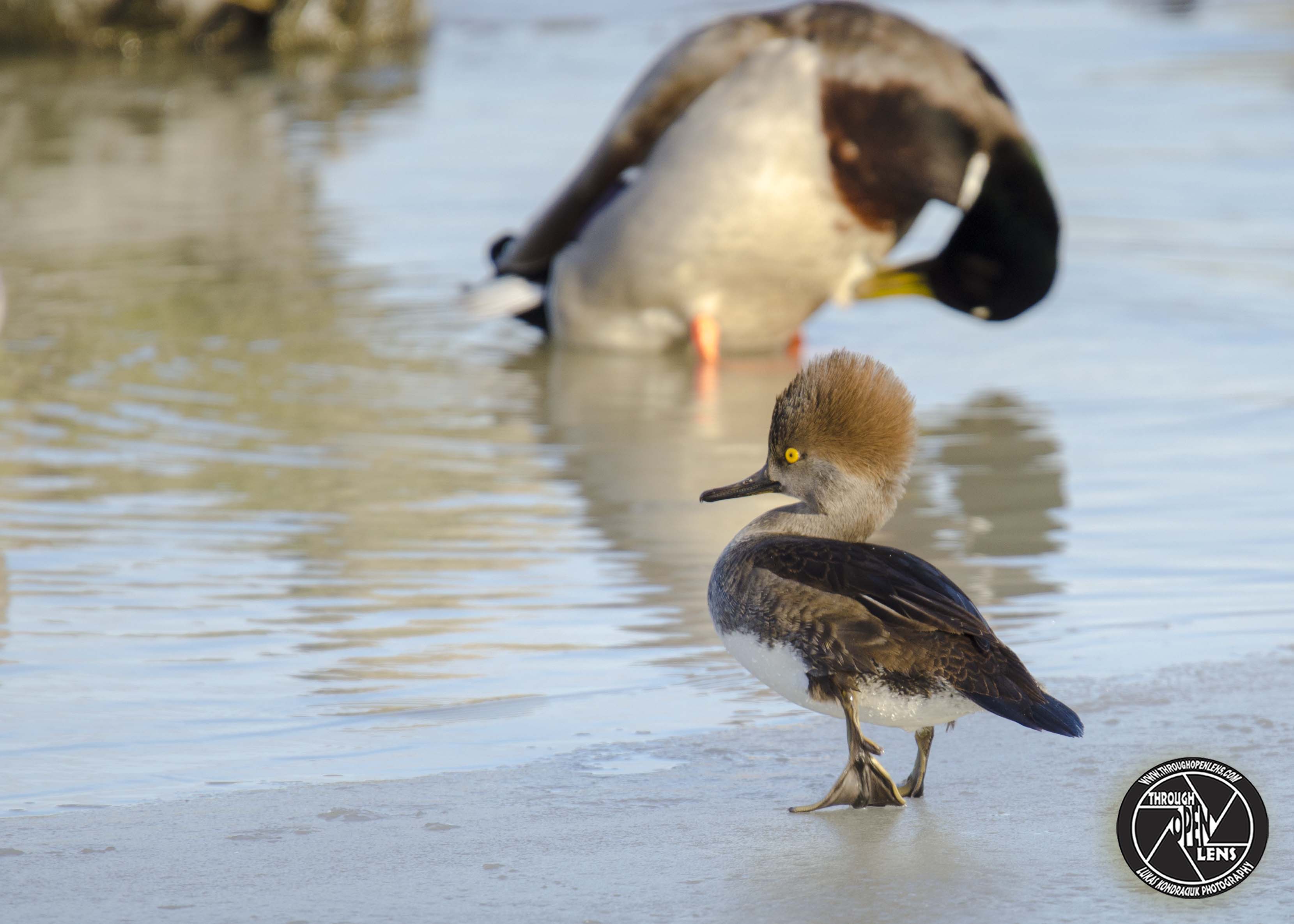
I’m A Duck That Does Not Give A Quack!

F/6.3, 1/500, ISO 250.

Hooded Merganser ( Female )

2 Guys walking down the street.

One walks into a bar, the other ducks.

Interesting Fact:  The female chooses the nest site, and may start scouting for next year’s tree cavity at the end of each breeding season. Nest cavities can be in live or dead trees and are usually close to water. Cavities are typically 10–50 feet off the ground, up to about 90 feet. Hooded Mergansers nest readily in boxes, preferring those with wood shavings or nest material from previous uses. They prefer cavities with 3–5 inch openings. ( https://www.allaboutbirds.org/guide/Hooded_Merganser/overview )
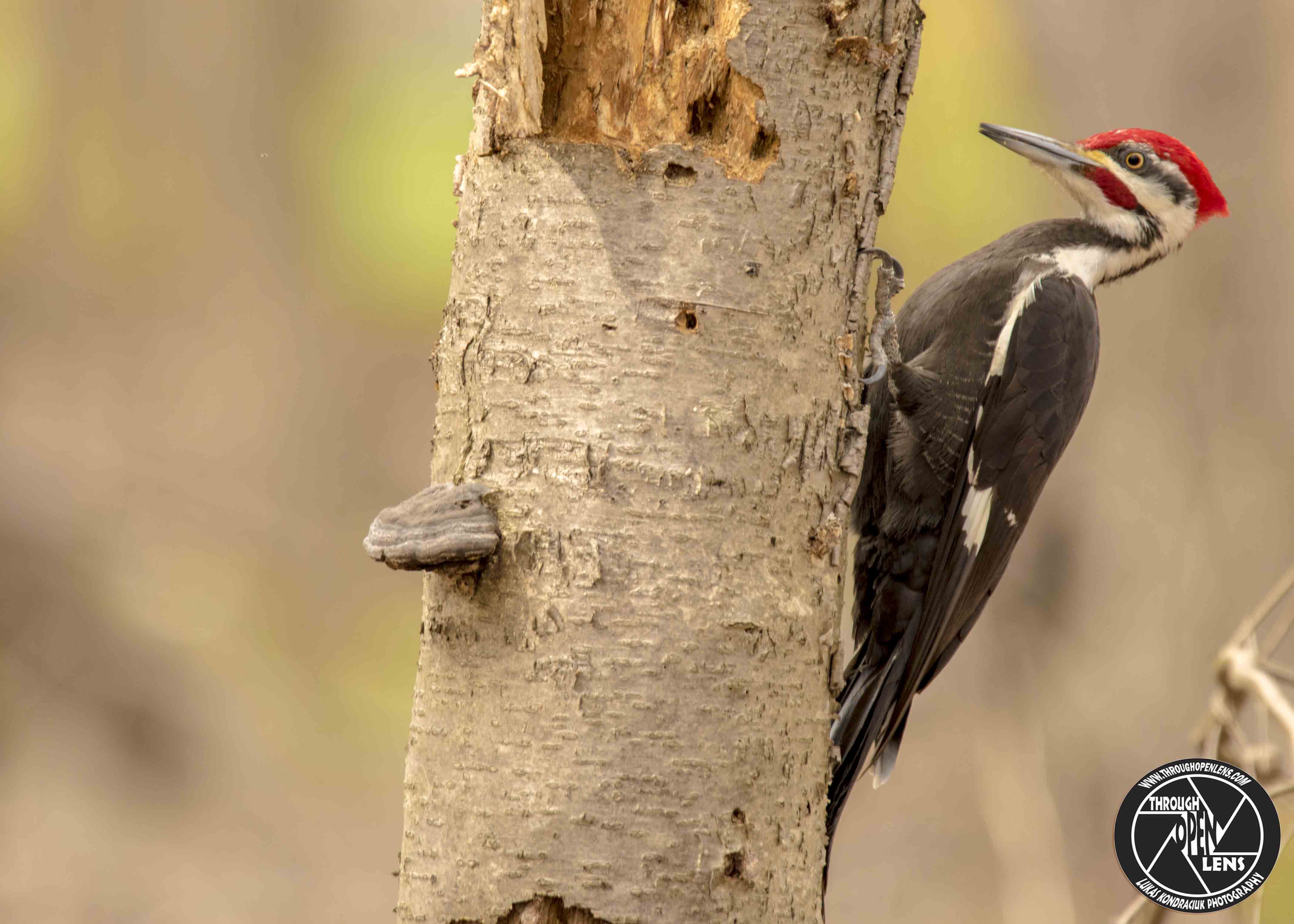
CAUTION! Headbanging In Progress!

F/6.3, 1/125, ISO 320.

Pileated Woodpecker 

What does a house wear?

Address.

Interesting Fact: Pileated Woodpeckers forage in large, dead wood—standing dead trees, stumps, or logs lying on the forest floor. They make impressive rectangular excavations that can be a foot or more long and go deep inside the wood. These holes pursue the tunnels of carpenter ants, the woodpecker’s primary food. ( Pileated Woodpecker Life History, All About Birds, Cornell Lab of Ornithology )

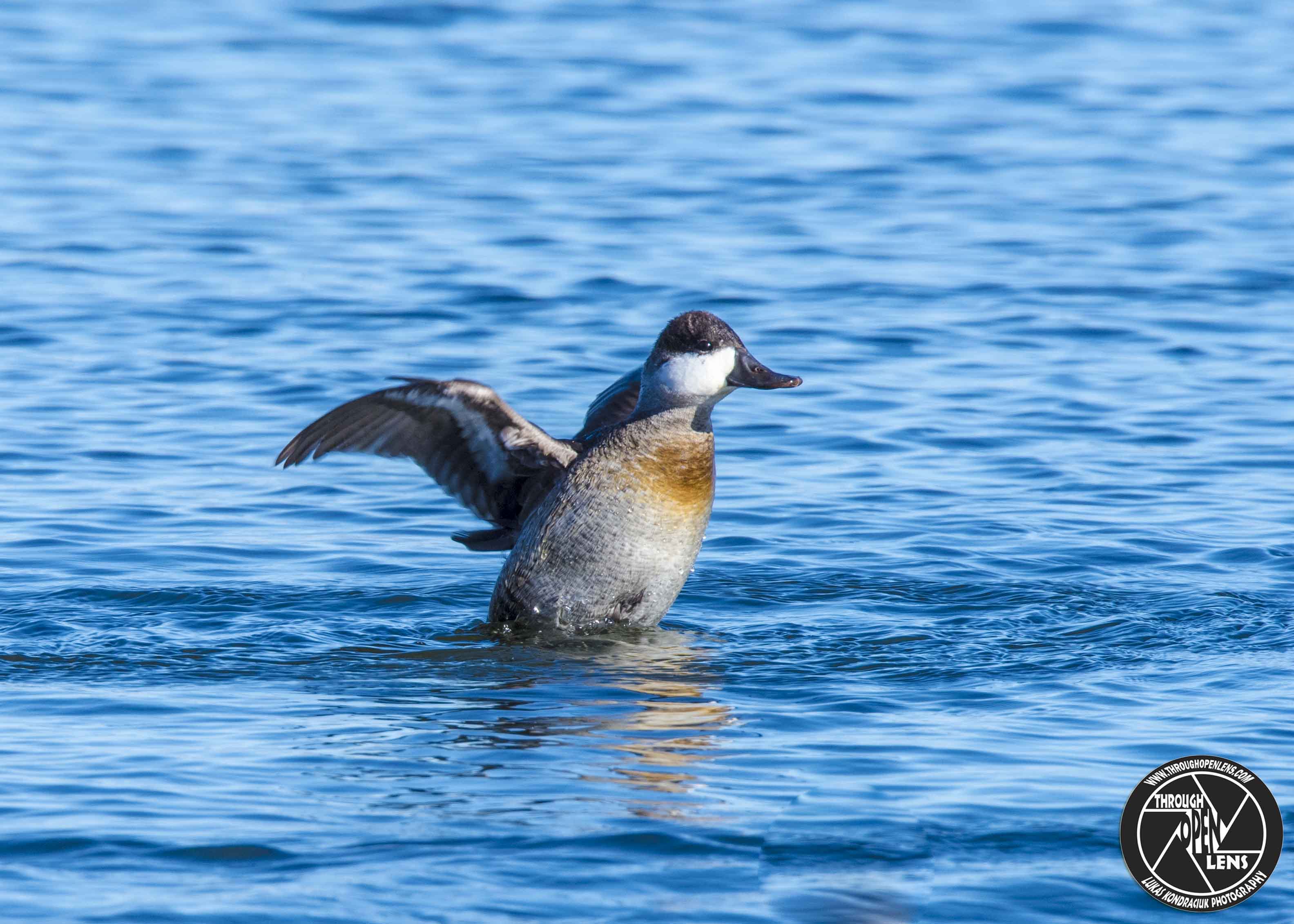
Like I Give A Duck!

F/11.0, 1/500, ISO 320.

Ruddy Duck 

Why do bees have sticky hair?

They use honey-combs.

Interesting Fact: Though Ruddy Ducks are native to the Americas, one population became established in England after captive ducks escaped in 1952. This population grew to about 3,500 individuals by 1992, and now appears to be expanding into the Netherlands, France, Belgium, and Spain. ( Ruddy Duck Overview, All About Birds, Cornell Lab of Ornithology )

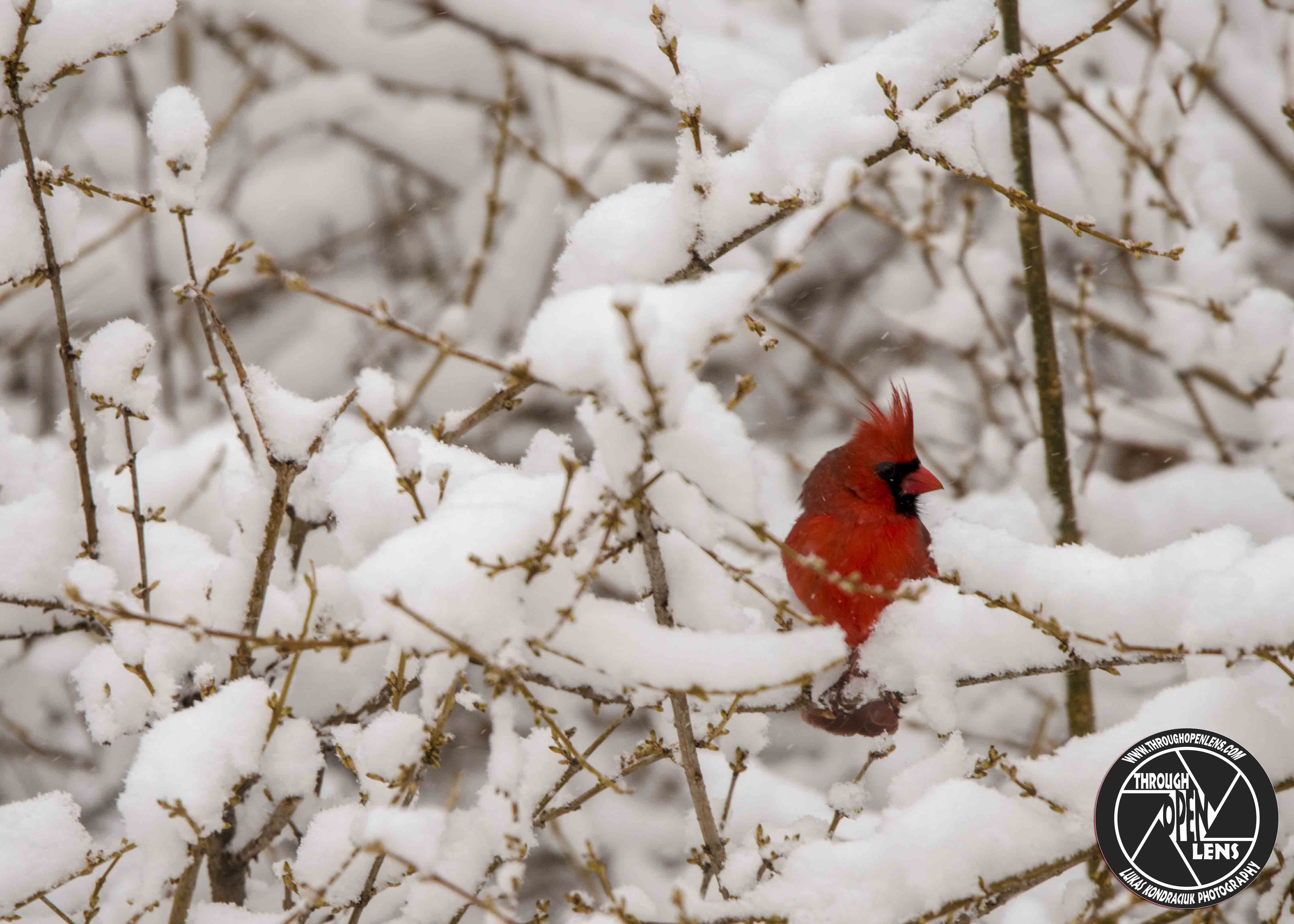
Snow Way!

F/8.0, 1/250, ISO 400.

Northern Cardinal ( Male )

In the class room

Bobby: ” Can I go the toilet? ” 

Teacher: ” Say the alphabet ”

Bobby: ” ABCDEFGHIJKLMNOQRSTUVWXYZ “

Teacher: “Where’s the P “

Bobby: ” Half way down my leg “

Interesting Fact: Northern Cardinals hop through low branches and forage on or near the ground. Cardinals commonly sing and preen from a high branch of a shrub. The distinctive crest can be raised and pointed when agitated or lowered and barely visible while resting. You typically see cardinals moving around in pairs during the breeding season, but in fall and winter they can form fairly large flocks of a dozen to several dozen birds. ( https://www.allaboutbirds.org/guide/Northern_Cardinal/lifehistory#behavior )

Swan Lake Ballet ( On Ice )

mute-swan-on-ice

F/8.0, 1/1000, ISO 640.

Mute Swan

A good looking woman walks into a bar wearing a tube top. She raises her hand to signal the bartender for a beer, revealing that she does not shave her

armpits.

Meanwhile, a sloppy drunk on the other side of the bar signals the bartender, “Buy that ballerina over there a drink on me.”

The bartender replies, “What makes you think she’s a ballerina?”

“Because,” answers the drunken man, “any chick that can lift her leg that high has GOT to be a ballerina.”

Interesting Fact: All of the Mute Swans in North America descended from swans imported from Europe from the mid 1800s through early 1900s to adorn large estates, city parks, and zoos. Escapees established breeding populations and are now established in the Northeast, Midatlantic, Great Lakes, and Pacific Northwest of the U.S. ( https://www.allaboutbirds.org/guide/Mute_Swan/lifehistory )

Flying Quack!

F/6.3, 1/500, ISO 280.

Hooded Merganser ( Male ) 

A police officer stops a Bob’s car.

Police Officer: “Your driver’s license please.”

Bob: “I’m really sorry, I forgot.”

Officer: “At home?”

Bob: “No, to do it.”

Interesting Fact:They take flight by running across the water, flying with fast wingbeats and never gliding until they are about to land (by skidding to a stop on the water). ( https://www.allaboutbirds.org/guide/Hooded_Merganser/lifehistory )  

Snow Way You’ve Got To Be Flaking Me!

F/5.6, 1/1600, ISO 400.

Mute Swan

Why was the snowman sad?

Cause he had a meltdown.

Interesting Fact: Male Mute Swans select the nest site and may start several nests before the female accepts the location. Nest sites are safe from flooding yet offer easy access to water, with ample nesting materials and food nearby–often on a small peninsula, along a heavily vegetated shoreline, or on a small to medium-sized island.  ( https://www.allaboutbirds.org/guide/Mute_Swan/lifehistory )


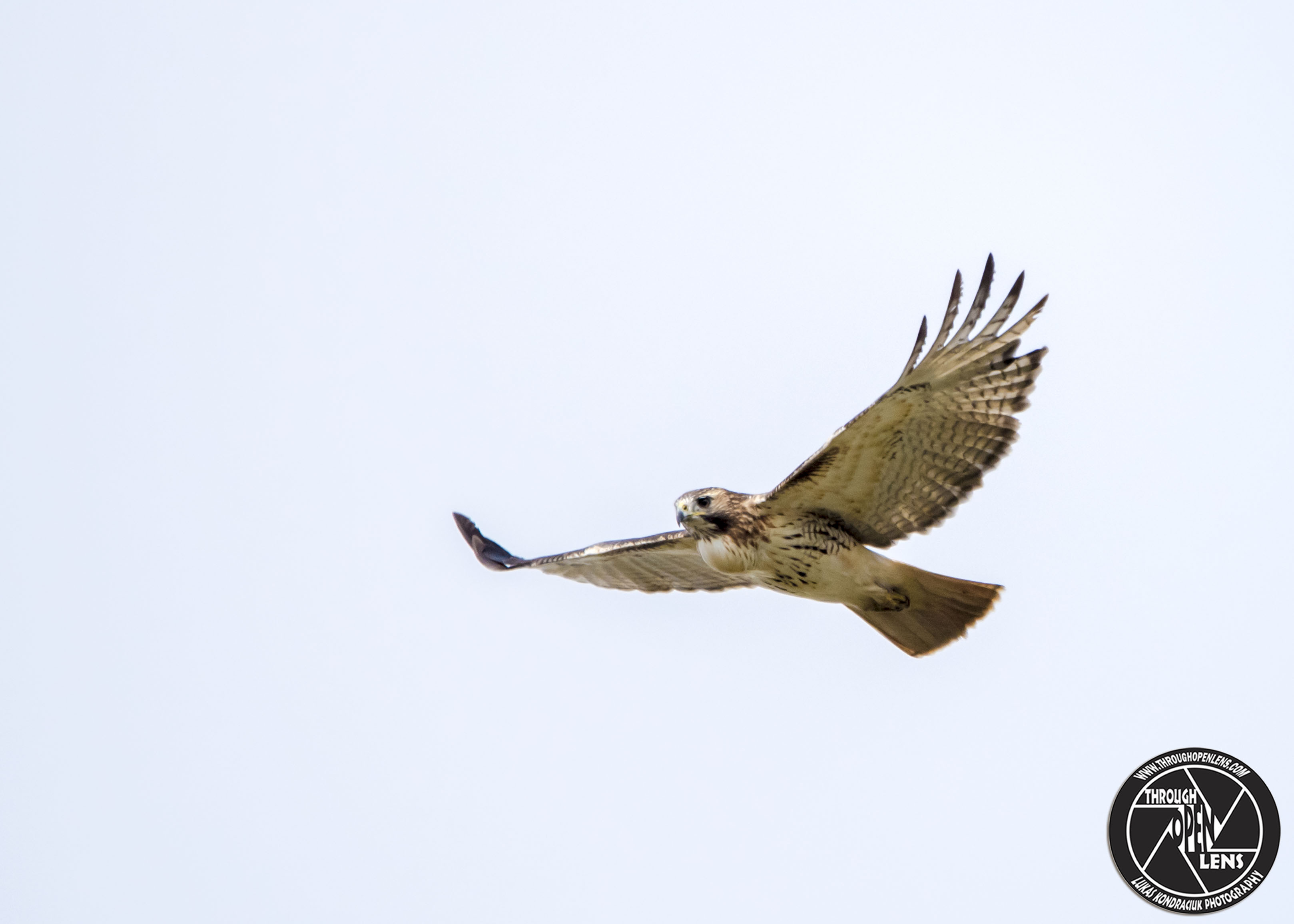
I’m So High!

F/6.3, 1/2500, ISO 320.

Red-tailed Hawk

One day a man came home from work to find his wife crying hysterically in the kitchen.

“What’s wrong, dearest?” asked the confused husband.

“Oh darling,” sobbed the wife,

“I was cleaning little Jen’s room when I found whips, handcuffs and chains under her bed, along with a very erotic porn magazine! What ever are we going to do?”

“Well,” replied the man, “I guess a spanking is out of the question?”

Interesting Fact: The oldest known wild Red-tailed Hawk was at least 30 years, 8 months old when it was found in Michigan in 2011, the same state where it had been banded in 1981. ( https://www.allaboutbirds.org/guide/Red-tailed_Hawk/overview )

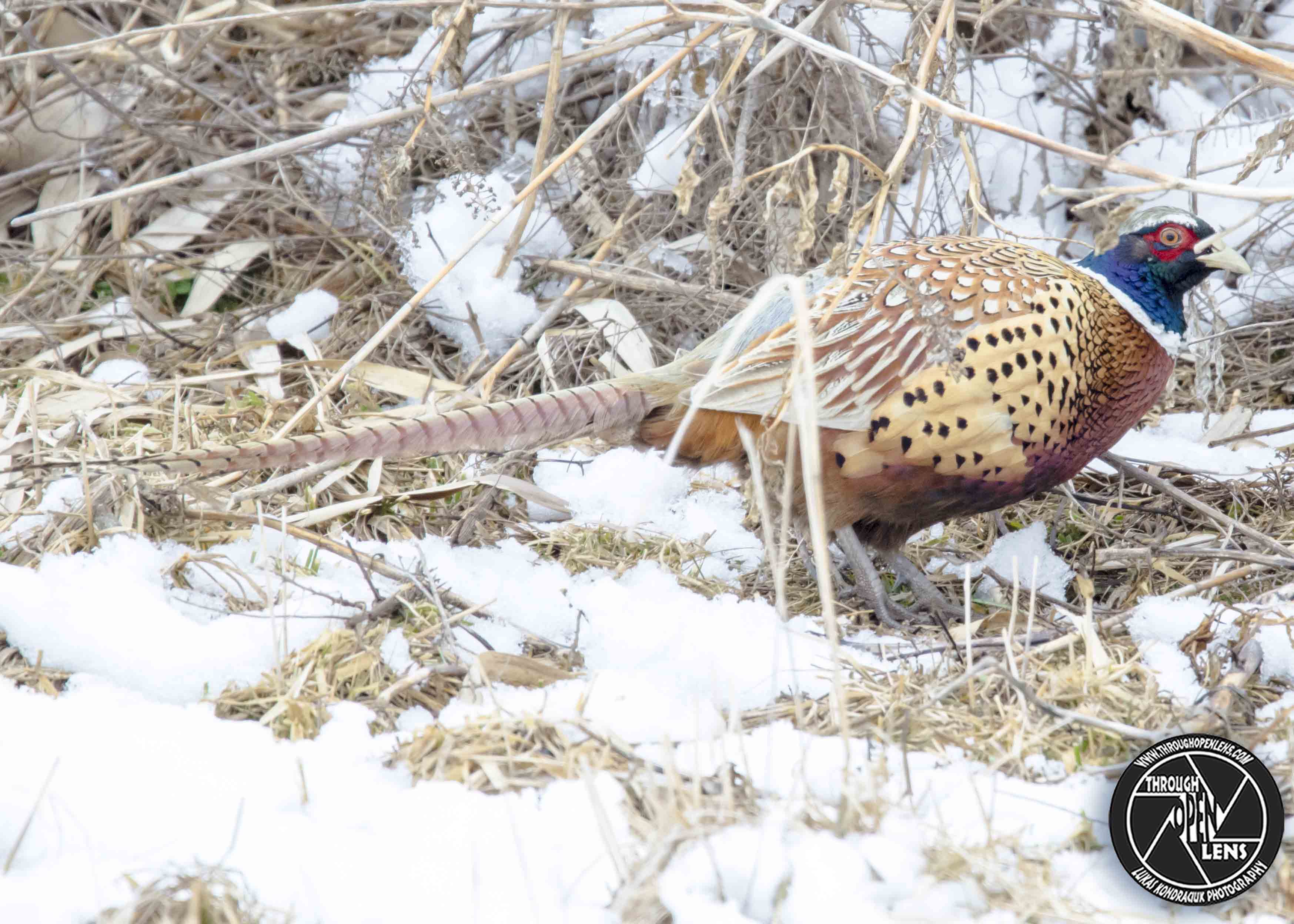
Mother Pheasant Plucker!

F/6.3, 1/250, ISO 1600.

Ring-Necked Pheasant

What is dangerous?

Sneezing while having diarrhea!

Interesting Fact:  Pheasants, along with most members of the grouse family, have specialized, powerful breast muscles—the “white meat” that you find on a chicken. These muscles deliver bursts of power that allow the birds to escape trouble in a hurry, flushing nearly vertically into the air and reaching speeds of nearly 40 miles per hour.  ( https://www.allaboutbirds.org/guide/Ring-necked_Pheasant/lifehistory )

I Got Blue More Than You!

F/7.1, 1/200, ISO 320.

Eastern Bluebird

In Court:

Judge: “Why did you steal the car?”

Defendant: “Your Honour I had to get to work.”

Judge: “Why didn’t you take the bus?”

Defendant: I don’t have a driver’s license for the bus.

Interesting Fact: Eastern Bluebirds occur across eastern North America and south as far as Nicaragua. Birds that live farther north and in the west of the range tend to lay more eggs than eastern and southern birds.  ( https://www.allaboutbirds.org/guide/Eastern_Bluebird )