What The Fox!

F/6.3, 1/30, ISO 500.

Red Fox 

What do you call a drunk shark?

Hammered Head

Interesting Fact: Red foxes are usually together in pairs or small groups consisting of families, such as a mated pair and their young, or a male with several females having kinship ties. The young of the mated pair remain with their parents to assist in caring for new kits.[8] The species primarily feeds on small rodents, though it may also target rabbitsgame birdsreptilesinvertebrates[6] and young ungulates.[6] Fruit and vegetable matter is also eaten sometimes.[9] Although the red fox tends to kill smaller predators, including other fox species, it is vulnerable to attack from larger predators, such as wolvescoyotesgolden jackals and medium- and large-sized felines. ( https://en.wikipedia.org/wiki/Red_fox )


I Know I Know I Am Standing Up For Myself!

F/6.3, 1/160, ISO 320.

Common Gallinule

Why is there only one Yogi Bear?

Because when they tried to make another one, they made a Boo-Boo.

Interesting Fact: The long-toed Common Gallinule walks atop floating vegetation and soft soils in a crouched position while slowly flicking its tail up. Seldom do you see them fly, but when they do, their flight is labored. They stride through water pumping their head forward with tail held horizontally and wings held up over the back. ( https://www.allaboutbirds.org/guide/Common_Gallinule/lifehistory )


PAUSE For A Moment And REFLECT

F/9.0, 1/320, ISO 320.

Red breasted Merganser 

What did E.T.’s mother say to him when he got home?

Where on Earth have you been?

Interesting Fact: The female creates a depression on the ground that she covers with dead grasses, forming a shallow bowl. She plucks down feathers from her breast to help insulate the nest. ( https://www.allaboutbirds.org/guide/Red-breasted_Merganser/lifehistory )


Always Be Yourself… Unless You Can Be A Duck… Then Always Be A Duck.

F/8.0, 1/250, ISO 200. 

Red-breasted Merganser 

Two men meet on opposite sides of a river.

One shouts to the other, “I need you to help me get to the other side!”

The other guy replies, “You’re on the other side!”

Interesting Fact: Red-breasted Mergansers are among the fastest flying ducks, clocking speeds of up to 81 miles per hour.  ( https://www.allaboutbirds.org/guide/Red-breasted_Merganser/lifehistory )


Danger Mouth Operates Faster Than Brain!

F/10.0, 1/640, ISO 250.

Belted Kingfisher

What did the salad say to the fridge?

Shut the door, I’m dressing!

Interesting Fact: Pleistocene fossils of Belted Kingfishers (to 600,000 years old) have been unearthed in Florida, Virginia, Tennessee, and Texas. The oldest known fossil in the kingfisher genus is 2 million years old, found in Alachua County, Florida. ( https://www.allaboutbirds.org/guide/Belted_Kingfisher )


OH SH*T!

F/9.0, 1/320, ISO 250.

Tree Swallow

Why do ghosts ride in elevators?

It keeps their spirits up.

Interesting Fact: They bathe by flying low over the water and skimming their bodies against the surface, then rising quickly while shaking off droplets. ( https://www.allaboutbirds.org/guide/Tree_Swallow/lifehistory )

Welcome To The Duck Side. We Have Quackers.

F/9.0, 1/320, ISO 320.

Ruddy Duck 

Why didn’t my girlfriend believe I was a ghost?

She could see right through me.

Interesting Fact:  The nest is usually made of dead, dry plant materials, though some are built entirely with green vegetation. It starts as a platform and becomes more bowl-like throughout the construction process, with an inner cup measuring 4–12 inches across and 0.5–5 inches deep. Ruddy Ducks usually weave a canopy of vegetation over their nests. ( https://www.allaboutbirds.org/guide/Ruddy_Duck/lifehistory )

Bad Hair Day: Ain’t Nobody Got Time For That!

F/9.0, 1/320, ISO 200.

Red-breasted Mergansers 

Can February March?

No, but April May.

Interesting Fact:Red-breasted Mergansers nest along forested riverbanks, marsh edges, lakeshores, coastal islands, and sandy shores with vegetation. They are never far from water. Female Red-breasted Mergansers select a spot on the ground under dense cover from low tree branches, fallen logs, or boulders. They nest alone or in colonies often with gulls and terns. ( https://www.allaboutbirds.org/guide/Red-breasted_Merganser/lifehistory )


Gone Crazy! Be Back Soon!

F/9.0, 1/320, ISO 320.

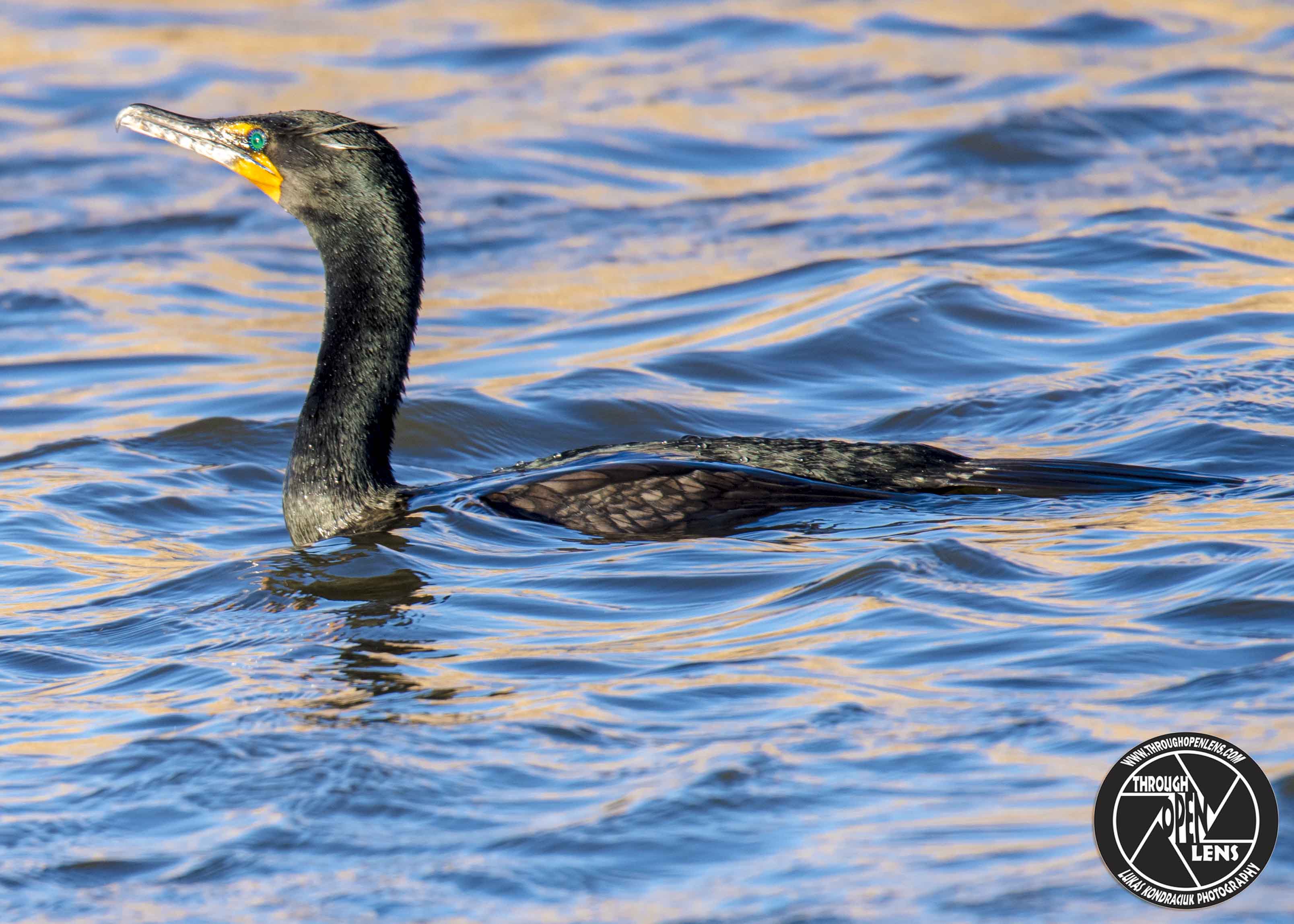
Double-crested Cormorant 

What did one toilet say to the other toilet?

You look a bit flushed.

Interesting Fact: Double-crested Cormorant nests often are exposed to direct sun. Adults shade the chicks and also bring them water, pouring it from their mouths into those of the chicks. ( https://www.allaboutbirds.org/guide/Double-crested_Cormorant )

Hey, these are my nuts!

F/5.6, 1/160, ISO 800.

Eastern Chipmunk

Why did the skeleton burp?

Because it didn’t have the guts to fart.

Interesting Fact: A chipmunk’s cheeks can expand to three times the size of its head and they have pouches in their cheeks where they hold their food until they get back to store it in their burrows ( http://www.pets4homes.co.uk/pet-advice/fun-interesting-facts-about-chipmunks.html )