Dont Be Afraid to Stick Your Neck Out!

F/9.0, 1/320, ISO 320.

Ring-necked Duck

Why is it hard for a ghost to tell a lie?

Because you can see right through him.

Interesting Fact:  Ring-necked Ducks feed by diving underwater, rather than by tipping up as “dabbling” ducks do. When diving, they leap forward in an arc to plunge underwater, and they swim using only their feet for propulsion. ( https://www.allaboutbirds.org/guide/Ring-necked_Duck/lifehistory )

Kinda Classy Kinda Hood

F/6.3, 1/500, ISO 220.

Hooded Merganser ( Female )

When is a door sweet and tasty?

When it’s jammed!

Interesting Fact: Unlike dabbling ducks, Hooded Mergansers swim low in the water. Their legs are far back on their bodies, which helps in diving but makes them awkward on land. They take flight by running across the water, flying with fast wingbeats and never gliding until they are about to land (by skidding to a stop on the water). ( https://www.allaboutbirds.org/guide/Hooded_Merganser/lifehistory )


I Give High A New Meaning!

F/13.0, 1/640, ISO 320.

Northern Harrier

What did the eggs say when the cops showed up?

Everybody scramble!

Interesting Fact: Northern Harriers hunt mostly small mammals and small birds, but they are capable of taking bigger prey like rabbits and ducks. They sometimes subdue larger animals by drowning them. ( https://www.allaboutbirds.org/guide/Northern_Harrier )

A Little Mud Never Hurt Anyone!

F/10.0, 1/400, ISO 320.

Northern Pintail Ducks

What did one tube of glue say to the other tube of glue?

We have to stick together.

Interesting Fact: Males and females also lift their chins to greet each other and sometimes tip their chins when threatened. Pairs form on the wintering grounds, but males often mate with other females on the breeding grounds, and pairs only stay together for a single breeding season. Courting males stretch their necks up and tip their bills down while giving a whistle call. Males also preen behind their wing to expose the green speculum. Interested females follow males with head bobbing, preening, and clucking. ( https://www.allaboutbirds.org/guide/Northern_Pintail/lifehistory )


And Since I Have No Place To Go Let It Snow, Let It Snow, Let It Snow.

F/7.1, 1/200, ISO 320.

Northern Cardinal Female

Why did the baseball coach throw Cinderella off the team?

Because she ran away from the ball.

Interesting Fact: A week or two before the female starts building, she starts to visit possible nest sites with the male following along. The pair call back and forth and hold nesting material in their bills as they assess each site. Nests tend to be wedged into a fork of small branches in a sapling, shrub, or vine tangle, 1-15 feet high and hidden in dense foliage. ( https://www.allaboutbirds.org/guide/Northern_Cardinal/lifehistory )


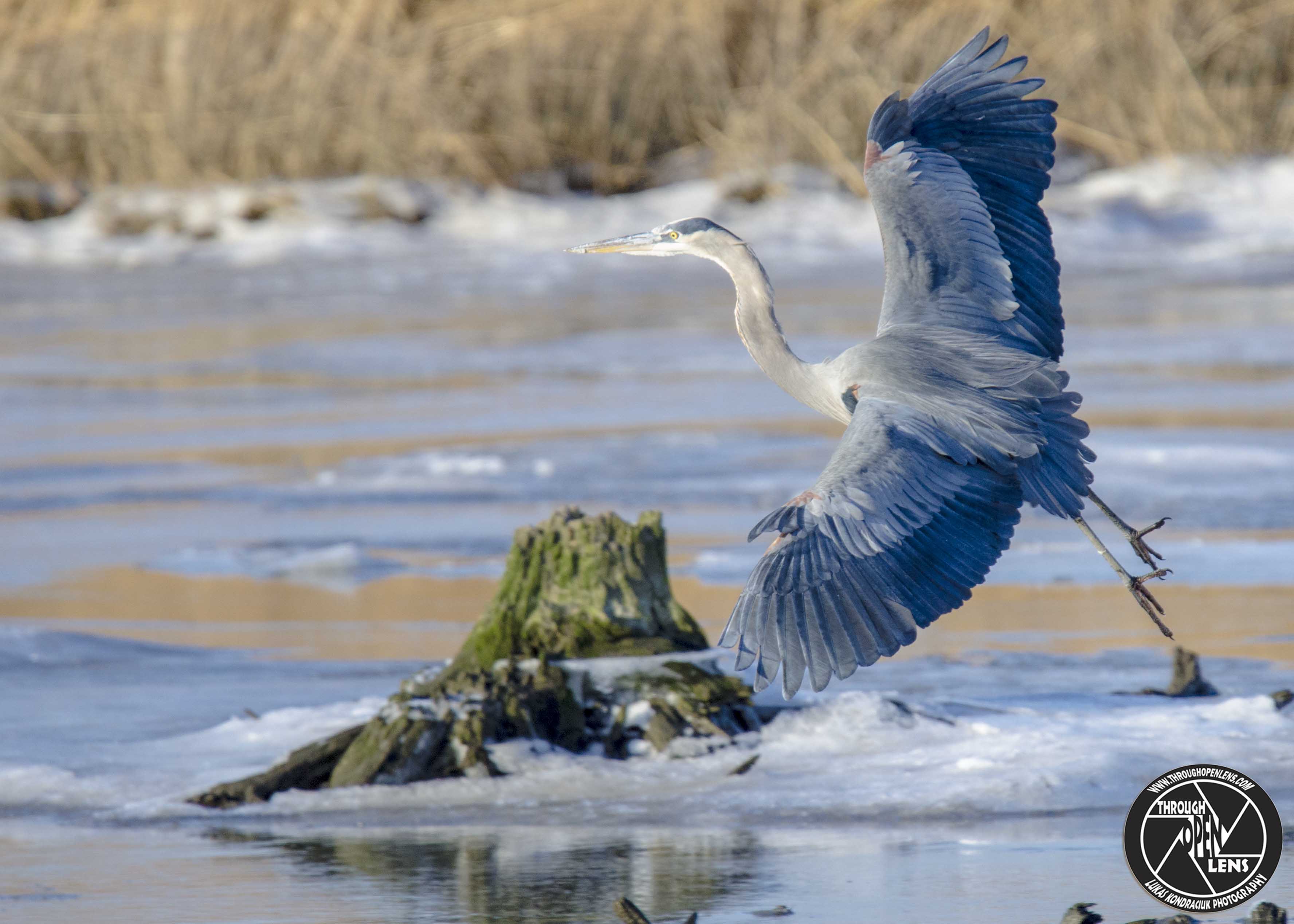
I Spread My Wings And I Fly!

F/6.3, 1/1000, ISO 640.

Great Blue Heron 

Why did the student wear eye-glasses in math class?

It improved DiVision !

Interesting Fact:  In flight the Great Blue Heron folds it neck into an “S” shape and trails its long legs behind, dangling them as it prepares to land or when courting. ( https://www.allaboutbirds.org/guide/Great_Blue_Heron/lifehistory )

Steady As She Goes!

F/6.3, 1/500, ISO 250.

Northern Pintail Duck

What did the salad say to the fridge?

Shut the door, I’m dressing!

Interesting Fact: Seemingly at home on land and water, Northern Pintails waddle through fields and swim gracefully with the tail pointed upwards. They erupt in flight from the water’s surface at a moment’s notice, wheeling and darting through the air on their slender wings.  ( https://www.allaboutbirds.org/guide/Northern_Pintail/lifehistory )


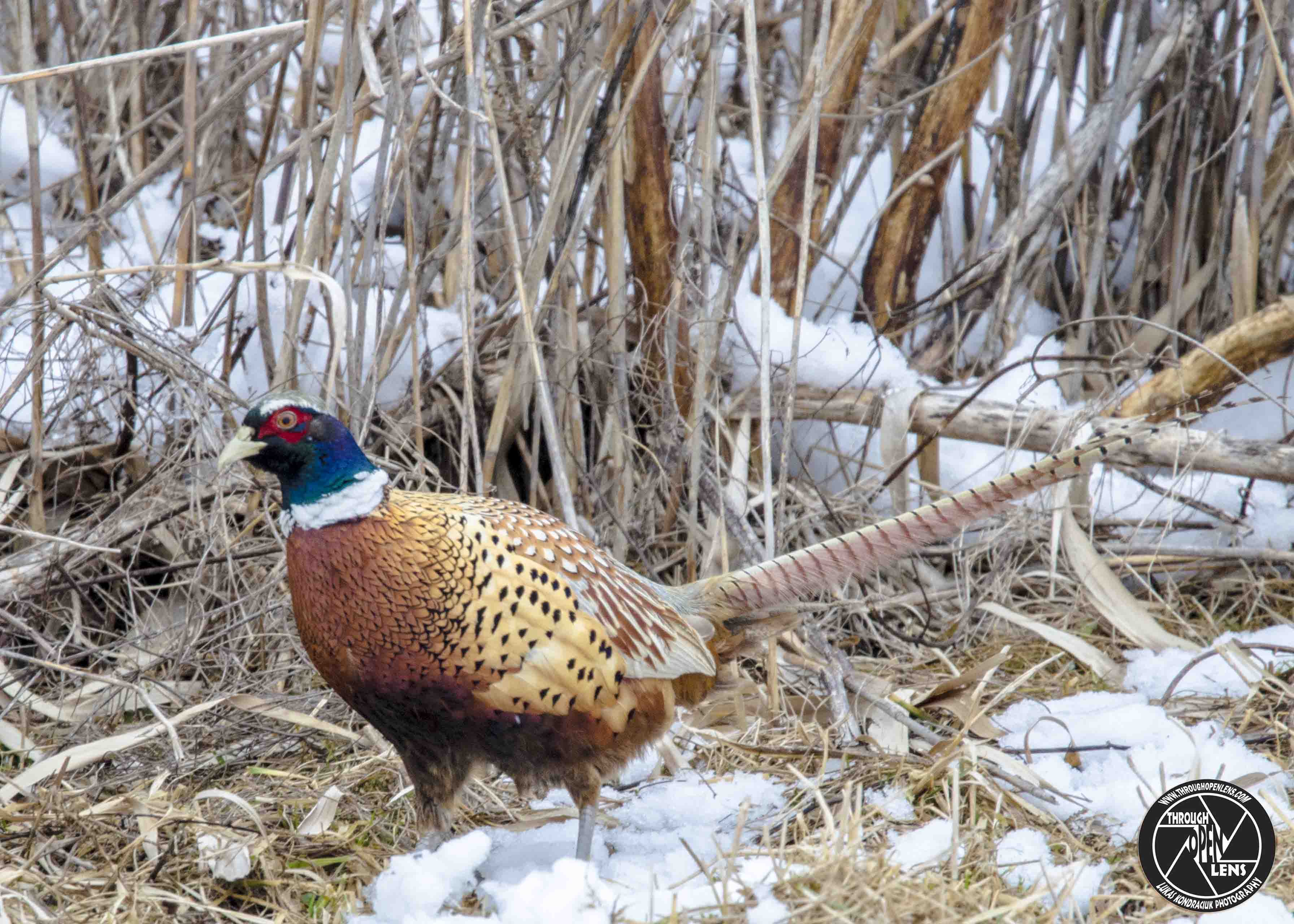
You Are Full Of It!

F/6.3, 1/250, ISO 1600.

Ring-Necked Pheasant

How do snowmen get around?

They ride an icicle!

Interesting Fact: Male Ring-necked Pheasants may harass other ground-nesting birds, such as the Gray Partridge and the Greater Prairie-Chicken. Female pheasants sometimes lay their own eggs in these birds’ nests. This may explain why some male pheasants have been seen chasing away male prairie-chickens and courting females—the pheasants may have been raised in prairie-chicken nests and imprinted on the wrong species. ( https://www.allaboutbirds.org/guide/Ring-necked_Pheasant# )

I Don’t Give A Duck!

F/10.0, 1/400, ISO 250.

Bufflehead Duck male

Why was the snowman looking through the carrots?

He was picking his nose!

Interesting Fact: During the winter, look for these tiny, black-and-white ducks in sheltered coves along the Atlantic or Pacific coast, or on inland ponds in southern North America. While foraging they spend half their time underwater, so scan carefully and patiently. ( https://www.allaboutbirds.org/guide/Bufflehead/ )


Don’t Be Jealous Of My Beak.

F/9.0, 1/320, ISO 640.

Common Loon 

Why is sex like math?

You add a bed, subtract the clothes, divide the legs, and pray there’s no multiplying!

Interesting Fact: A hungry loon family can put away a lot of fish. Biologists estimate that loon parents and their 2 chicks can eat about a half-ton of fish over a 15-week period.  ( https://www.allaboutbirds.org/guide/Common_Loon )