Let Me Tell You A Secret.

F/10.0, 1/400, ISO 640.

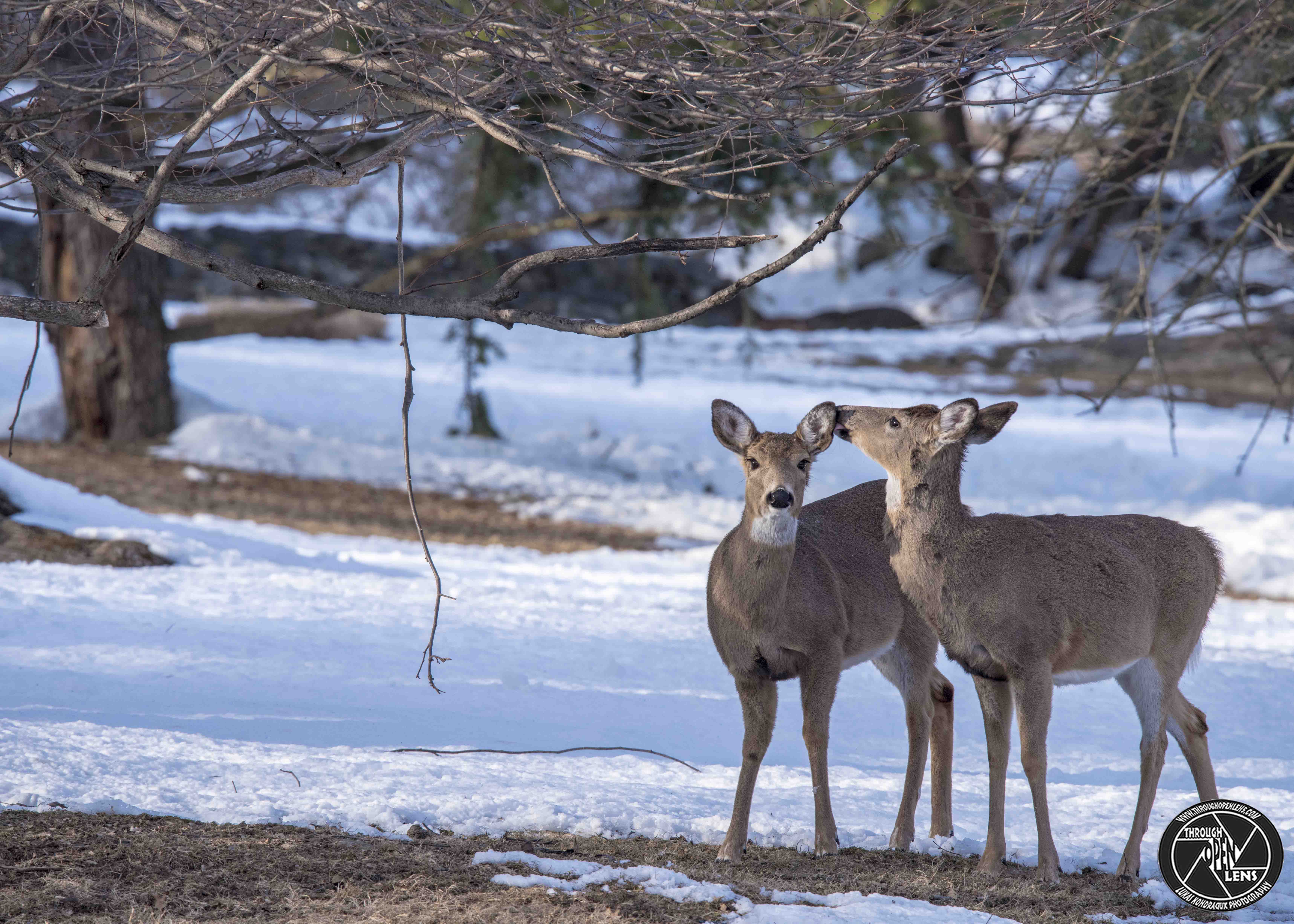
White-Tailed Deer

Who did Bambi invite to his birthday party?

His nearest and deer-est friends.

Interesting Fact: Although most often thought of as forest animals depending on relatively small openings and edges, white-tailed deer can equally adapt themselves to life in more open prairie, savanna woodlands, and sage communities as in the Southwestern United States and northern Mexico. These savanna-adapted deer have relatively large antlers in proportion to their body size and large tails. Also, a noticeable difference exists in size between male and female deer of the savannas. The Texas white-tailed deer (O. v. texanus), of the prairies and oak savannas of Texas and parts of Mexico, are the largest savanna-adapted deer in the Southwest, with impressive antlers that might rival deer found in Canada and the northern United States. Populations of Arizona (O. v. couesi) and Carmen Mountains (O. v. carminis) white-tailed deer inhabit montane mixed oak and pine woodland communities.[21] The Arizona and Carmen Mountains deer are smaller, but may also have impressive antlers, considering their size. The white-tailed deer of the Llanos region of Colombia and Venezuela (O. v. apurensis and O. v. gymnotis) have antler dimensions similar to the Arizona white-tailed deer.  ( https://en.wikipedia.org/wiki/White-tailed_deer )
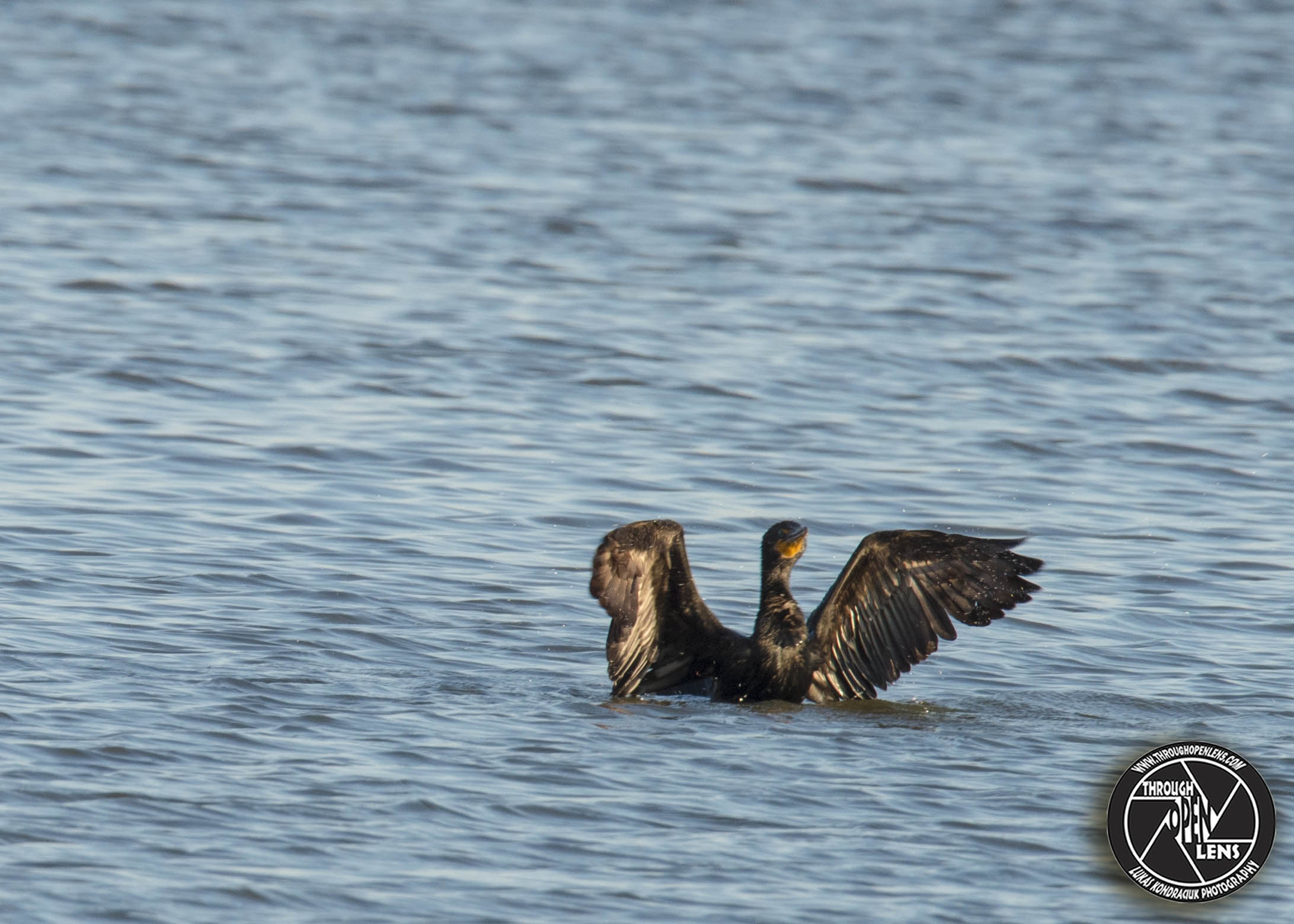
I’m Over Here!

F/13.0, 1/640, ISO 320.

Double-crested Cormorant

Teacher called on a student in the classroom:

Teacher: Name two days of the week that start with “t”.

Student: Today and Tomorrow

Interesting Fact: Double-crested Cormorant nests often are exposed to direct sun. Adults shade the chicks and also bring them water, pouring it from their mouths into those of the chicks. ( https://www.allaboutbirds.org/guide/Double-crested_Cormorant/lifehistory )

Take Off And See Whats Out There!

F/7.1, 1/200, ISO 400.

Common Merganser ( Female )

Why was the baby strawberry crying?

Because her mom and dad were in a jam.

Interesting Fact: The female chooses the nest site, which is usually in a natural cavity or woodpecker hole in a live or dead tree, up to 100 feet off the ground and within a mile of water. Common Mergansers nest less frequently in rock crevices, old sheds, chimneys, lighthouses, holes in banks, holes in the ground, hollow logs, and burrows. They readily nest in boxes, including those designed for the much smaller Common Goldeneye. Sometimes they nest on the ground. ( https://www.allaboutbirds.org/guide/Common_Merganser/lifehistory )

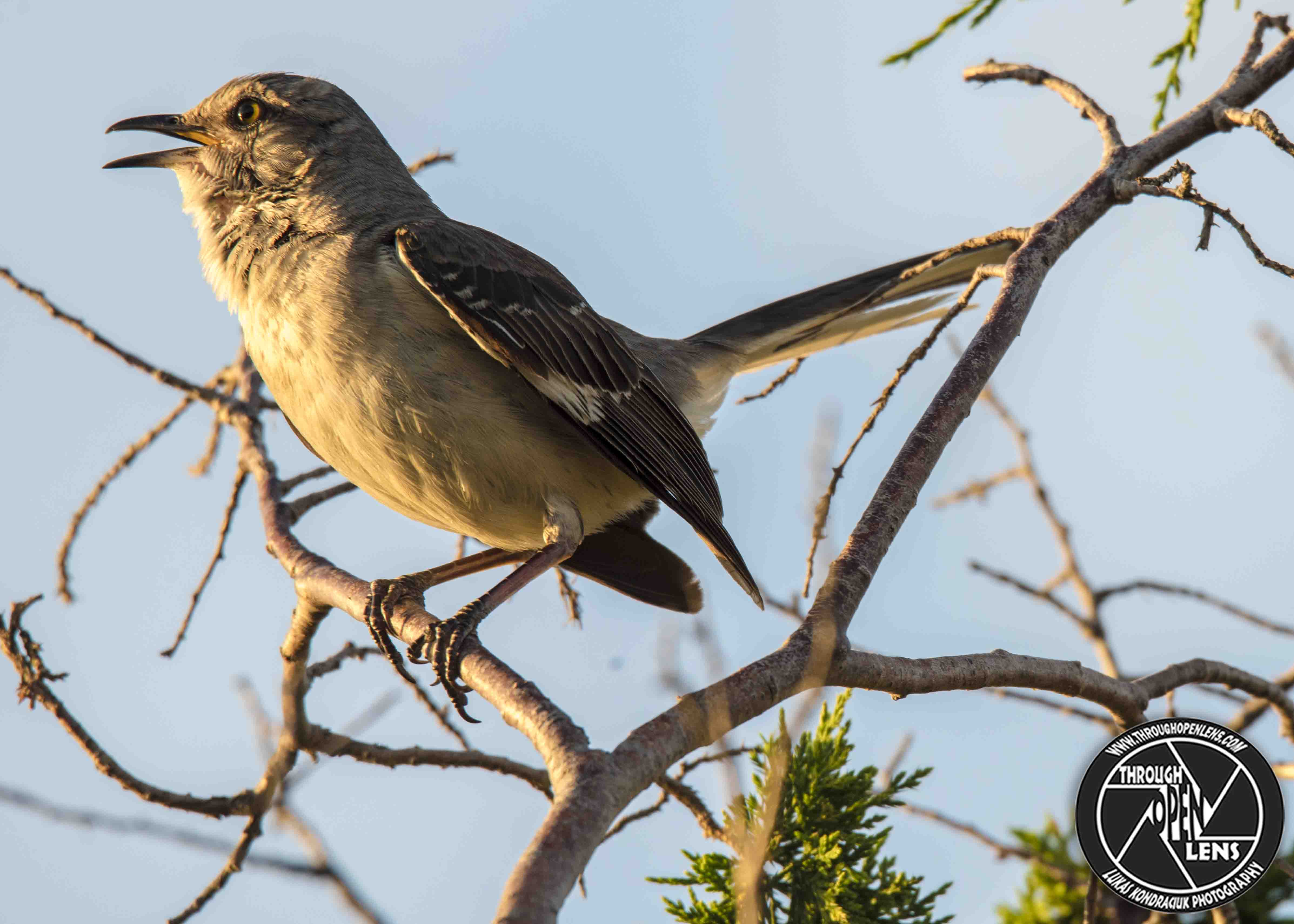
Are You Mocking Me?

F/9.0, 1/320, ISO 250.

Northern Mockingbird

What do you call a snowman in July?

A puddle.

Interesting Fact: It’s not just other mockingbirds that appreciate a good song. In the nineteenth century, people kept so many mockingbirds as cage birds that the birds nearly vanished from parts of the East Coast. People took nestlings out of nests or trapped adults and sold them in cities such as Philadelphia, St. Louis, and New York, where, in 1828, extraordinary singers could fetch as much as $50. ( https://www.allaboutbirds.org/guide/Northern_Mockingbird/lifehistory )

Grow Old With Me.

F/9.0, 1/320, ISO 200.

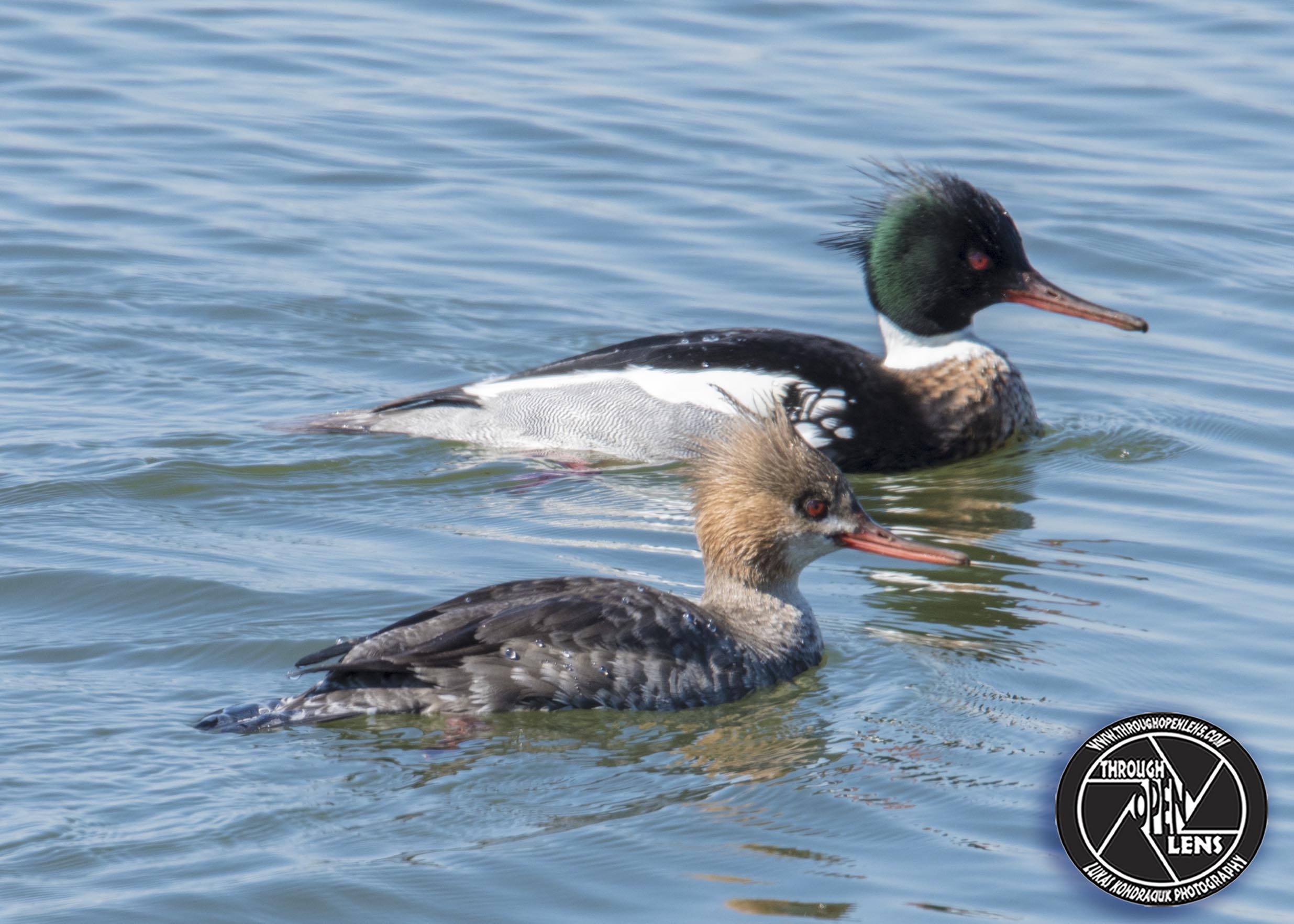
Red-breasted Mergansers

Why did the boy eat his homework?

Because his teacher said it was a piece of cake!

Interesting Fact: The oldest recorded Red-breasted Merganser was a female, and at least 9 years, 6 months old when she was shot in Alaska, the same state where she had been banded. ( https://www.allaboutbirds.org/guide/Red-breasted_Merganser/lifehistory )

You’re Duckie And Thats No Wise Quacky!

F/8.0, 1/250, ISO 200.

Common Eider ( Males )

What did the duck say when he dropped the dishes?

“I hope I didn’t quack any!”

Interesting Fact: A colorful duck of the northern seacoasts, the Common Eider is the largest duck in the Northern Hemisphere. ( https://identify.whatbird.com/obj/1095/overview/Common_Eider.aspx )

That Hawkward Moment!

F/7.1, 1/200, ISO 400.

A pirate walks into a bar with a steering wheel on his pants, a peg leg and a parrot on his shoulder. The bartender says, “Hey, you’ve got a steering wheel on your pants.”

The pirate says, “Arrrr, I know. It’s driving me nuts.”

Interesting Fact: ed-tailed Hawks typically put their nests in the crowns of tall trees where they have a commanding view of the landscape. They may also nest on a cliff ledge or on artificial structures such as window ledges and billboard platforms. ( https://www.allaboutbirds.org/guide/Red-tailed_Hawk/lifehistory )

Deer Me To Jump?!

F/13.0, 1/640, ISO1600.

White-Tailed Deer

What is the cheapest kind of meat?

Deer Balls, two for under a Buck!

Interesting Fact: White-tailed deer are generalists and can adapt to a wide variety of habitats.[20] The largest deer occur in the temperate regions of Canada and United States. The northern white-tailed deer (O. v. borealis), Dakota white-tailed deer (O. v. dacotensis), and northwest white-tailed deer (O. v. ochrourus) are some of the largest animals, with large antlers. The smallest deer occur in the Florida Keys and in partially wooded lowlands in the neotropics. ( https://en.wikipedia.org/wiki/White-tailed_deer )


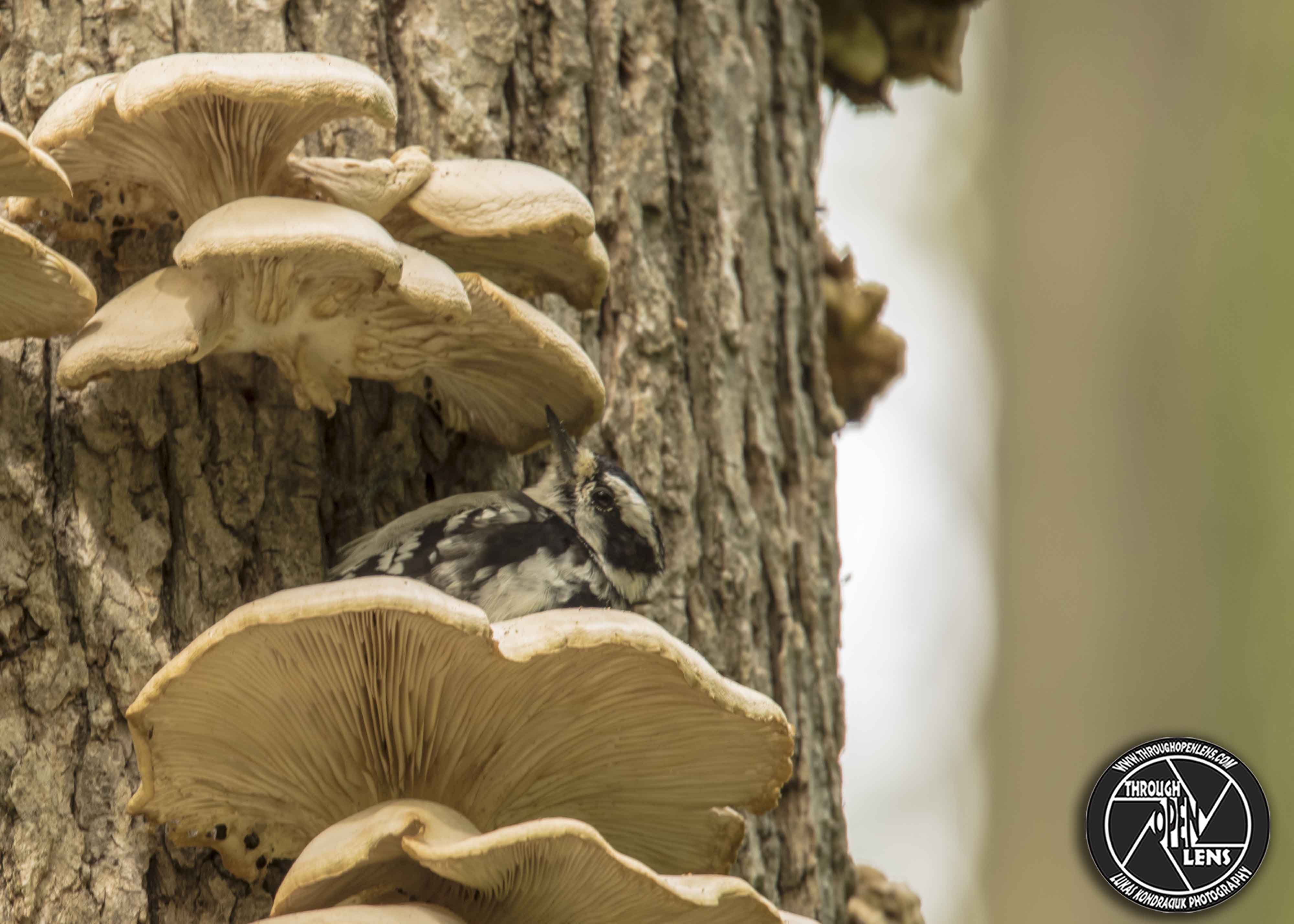
These Mushrooms Are Trippy!

F/6.3, 1/50, ISO 320.

Downy Woodpecker

“Doctor doctor I feel that Im a pack of card. What can I do ?”

Doctor: “I deal with you later.”

Interesting Fact: Downy Woodpeckers have the undulating flight pattern typical of many woodpecker species, alternating quick wingbeats with folding the wings against the body. When having a dispute with another bird, Downy Woodpeckers fan their tails, raise their head feathers, and jerk their beaks from side to side. In spring you may see courtship displays in which males and females fly between trees with slow, fluttering wingbeats that look almost butterfly-like. ( https://www.allaboutbirds.org/guide/Downy_Woodpecker/lifehistory )


My Eyes Always Come Out Red In Photos

F/ 6.3, 1/640, ISO 200.

Canvasback

“Doctor, doctor, my wife thinks she’s a duck.”

“You better bring her in to see me straight away.”

“I can’t do that – she’s already flown south for the winter.”  

Interesting Fact: The species name of the Canvasback, Aythya valisineria, comes from Vallisneria americana, or wild celery, whose winter buds and rhizomes are its preferred food during the nonbreeding period.  ( https://www.allaboutbirds.org/guide/Canvasback/lifehistory )