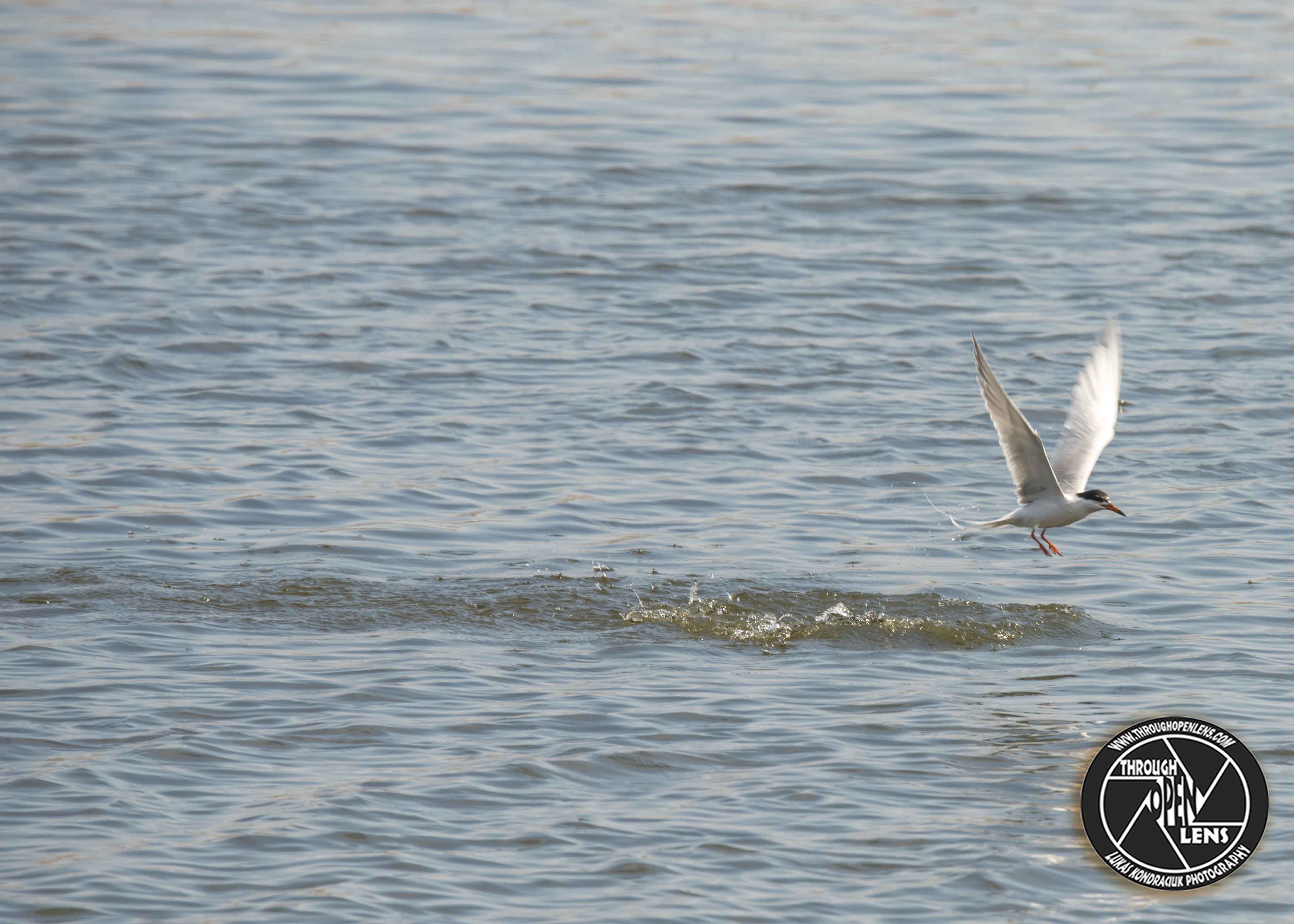
F/10.0, 1/400, ISO 160.
Common Tern
What do you call cheese that is not yours?
Nacho Cheese
Interesting Fact: Plunges into water from flight; may hover briefly before plunging. ( https://www.allaboutbirds.org/guide/Common_Tern/lifehistory )

F/10.0, 1/400, ISO 160.
Common Tern
What do you call cheese that is not yours?
Nacho Cheese
Interesting Fact: Plunges into water from flight; may hover briefly before plunging. ( https://www.allaboutbirds.org/guide/Common_Tern/lifehistory )

F/6.3, 1/125, ISO 320.
Eastern chipmunks
What do you call a rooster who wakes you up at the same time every morning?
An alarm cluck!
Interesting Fact: The eastern chipmunk defends its burrow and lives a solitary life, except during mating season. Females usually produce one or two litters of three to five young.[5] The two breeding seasons are from February to April and from June to August. During the winter, the chipmunk may enter long periods of torpor, but does not truly hibernate. ( https://en.wikipedia.org/wiki/Eastern_chipmunk )

F/6.3, 1/100, ISO 500.
Chipping Sparrow
Why do fish live in salt water?
Because pepper makes them sneeze.
Interesting Fact: In summer, male Chipping Sparrows defend territories against other Chipping Sparrows, but often tolerate other species as long as they don’t go too near the nest. After the breeding season, Chipping Sparrows form flocks of several dozen, foraging together among grasses and at bird feeders. Their flight pattern is energetic, straight, and only slightly undulating. ( https://www.allaboutbirds.org/guide/Chipping_Sparrow/lifehistory )

F/7.1, 1/160, ISO 320.
American Robin
Why are vampires so easy to fool?
Because they are suckers.
Interesting Fact: An American Robin can produce three successful broods in one year. On average, though, only 40 percent of nests successfully produce young. Only 25 percent of those fledged young survive to November. From that point on, about half of the robins alive in any year will make it to the next. Despite the fact that a lucky robin can live to be 14 years old, the entire population turns over on average every six years. ( https://www.allaboutbirds.org/guide/American_Robin/lifehistory )

F/10.0, 1/400, ISO 200.
Osprey
What do lawyers wear to court?
Lawsuits!
Interesting Fact: The Osprey readily builds its nest on manmade structures, such as telephone poles, channel markers, duck blinds, and nest platforms designed especially for it. Such platforms have become an important tool in reestablishing Ospreys in areas where they had disappeared. In some areas nests are placed almost exclusively on artificial structures. ( https://www.allaboutbirds.org/guide/Osprey/lifehistory )

F/5.6, 1/200, ISO 100.
Canada Goose Goslings
What do you get when you cross fish and an elephant?
Swimming trunks.
Interesting Fact: Young often remain with their parents for their entire first year, especially in the larger subspecies. As summer wanes birds become more social; they may gather in large numbers at food sources; where food is limited and patchy, may compete with displays and fights. ( https://www.allaboutbirds.org/guide/Canada_Goose/lifehistory )

F/8.0, 1/250, ISO 250.
Great Blue Heron
Why was strawberry sad?
Because her mom was in a jam.
Interesting Fact: Great Blue Herons nest mainly in trees, but will also nest on the ground, on bushes, in mangroves, and on structures such as duck blinds, channel markers, or artificial nest platforms. Males arrive at the colony and settle on nest sites; from there, they court passing females. Colonies can consist of 500 or more individual nests, with multiple nests per tree built 100 or more feet off the ground. ( https://throughopenlens.com/tag/great-blue-heron/ )
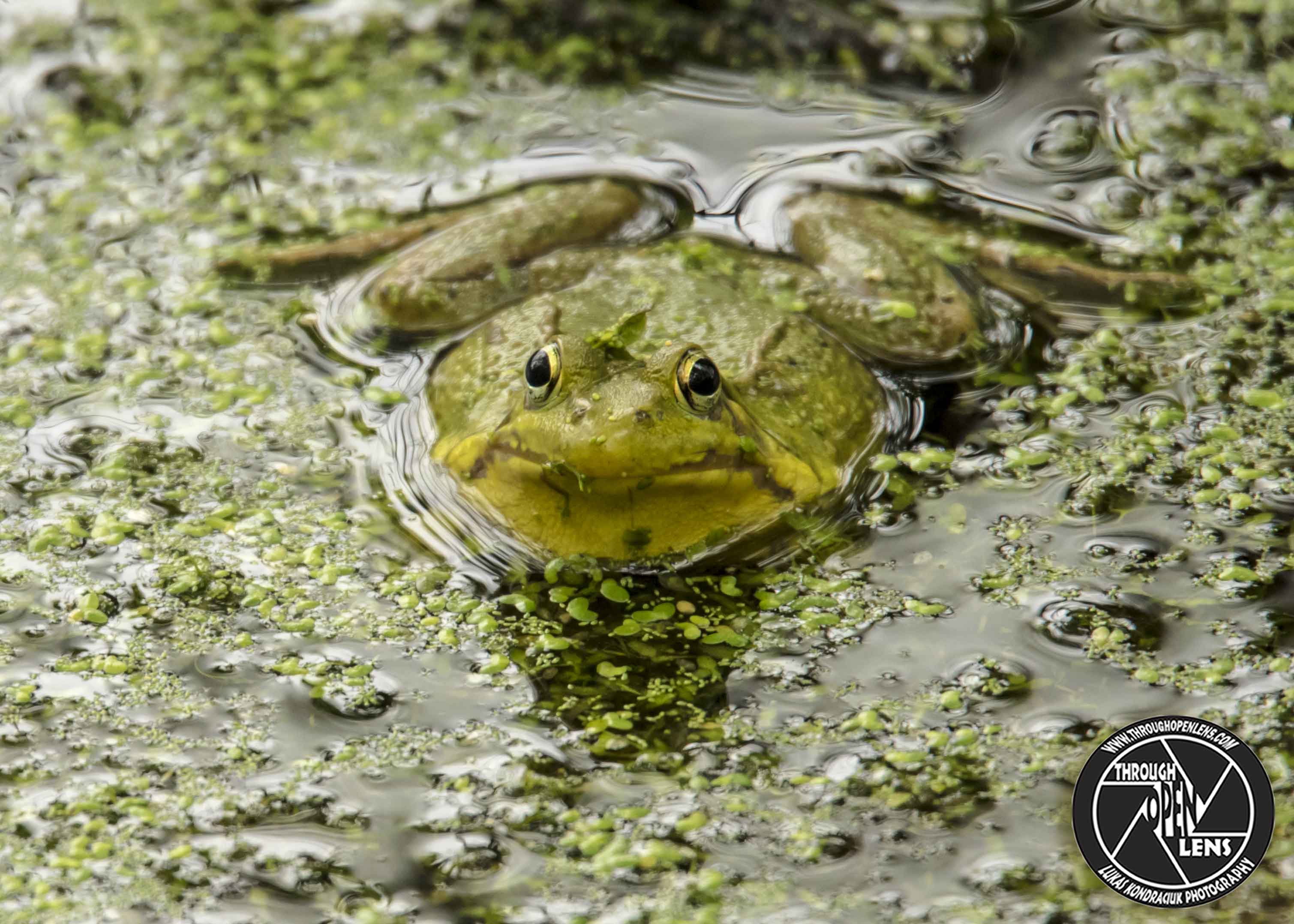
F/6.3, 1/80, ISO 640.
Northern Green Frog
Why are frogs so happy?
They eat whatever bugs them!
Interesting Fact: The northern green frog dwells in marshes, swamps, ponds, lakes, springs, and other aquatic environment. It is active both day and night. ( https://en.wikipedia.org/wiki/Northern_green_frog )

F/6.3, 1/160, ISO 320.
Common Gallinule
Why is there only one Yogi Bear?
Because when they tried to make another one, they made a Boo-Boo.
Interesting Fact: The long-toed Common Gallinule walks atop floating vegetation and soft soils in a crouched position while slowly flicking its tail up. Seldom do you see them fly, but when they do, their flight is labored. They stride through water pumping their head forward with tail held horizontally and wings held up over the back. ( https://www.allaboutbirds.org/guide/Common_Gallinule/lifehistory )

F/9.0, 1/320, ISO 320.
Red breasted Merganser
What did E.T.’s mother say to him when he got home?
Where on Earth have you been?
Interesting Fact: The female creates a depression on the ground that she covers with dead grasses, forming a shallow bowl. She plucks down feathers from her breast to help insulate the nest. ( https://www.allaboutbirds.org/guide/Red-breasted_Merganser/lifehistory )
 Through Open Lens