Muddy Quack!

F/6.3, 1/250, ISO 450.

Northern Pintail Duck

What day do fish hate?

Fry-day!

Interesting Fact: The Northern Pintail is among the earliest nesting ducks in North America, beginning shortly after ice-out in many northern areas. ( https://www.allaboutbirds.org/guide/Northern_Pintail/lifehistory )

I Can Walk On Water!

F/13.0, 1/640, ISO 320.

Ring-billed Gull

Two Police officers are talking:

A naked women robbed a bank.

Nobody could remember her face.

Interesting Fact: Ring-billed Gulls near Tampa Bay, Florida, became accustomed to feasting on garbage at an open landfill site. Then, in 1983, operators replaced the dumping grounds with closed incinerators. The thwarted scavengers found themselves another open dump, but the pattern continues all across the gull’s range. When waste-management practices shift from open landfills to closed incinerators, gull numbers often drop. ( https://www.allaboutbirds.org/guide/Ring-billed_Gull/lifehistory )

Splash Down!

F/8.0, 1/2000, ISO 800.

Common Merganser 

Why was the math book so sad?

It had a lot of problems.

Interesting Fact: Common Mergansers spend much of their time afloat, loafing, fishing, and often sleeping on open water. They may form flocks of up to 75 individuals. They often swim in small groups along the shoreline, dipping their heads underwater to search for prey and then diving with a slight leap. Often when one bird dives in a large group, the others follow the leader and disappear. ( Common Merganser Life History, All About Birds, Cornell Lab of Ornithology )


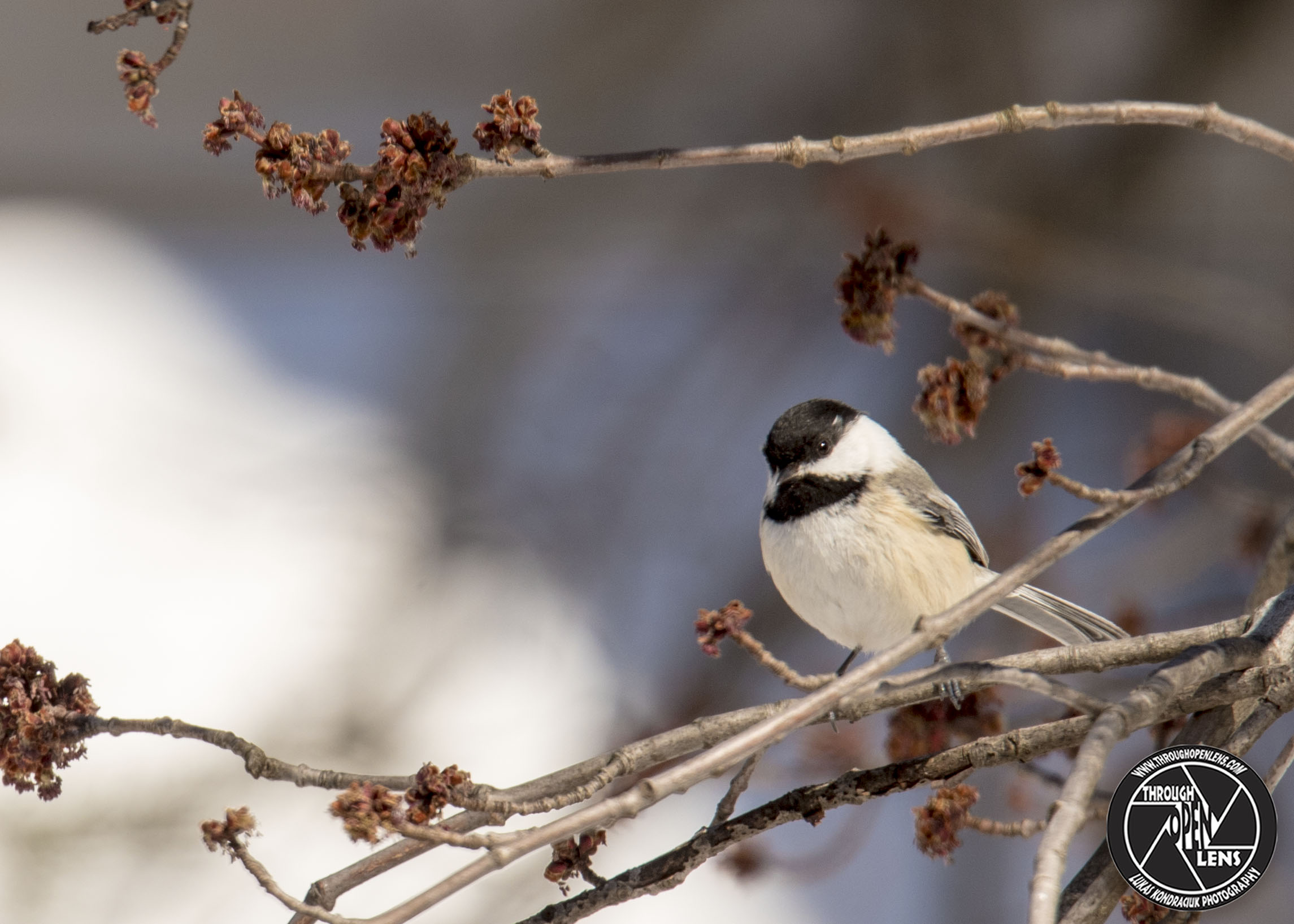
No Matter How Long The Winter, Spring Is Sure To Follow!

F/10.0, 1/400, ISO 160.

Black-capped Chickadee

What did the tree say to spring?

What a re-leaf.

Interesting Fact: Chickadee calls are complex and language-like, communicating information on identity and recognition of other flocks as well as predator alarms and contact calls. The more dee notes in a chickadee-dee-dee call, the higher the threat level. ( https://www.allaboutbirds.org/guide/Black-capped_Chickadee/lifehistory )

I Know You Are Jealous Of My Beak

F/8.0, 1/250, ISO 320.

Northern Shoveler ( Female ) 

How do you know if there’s a snowman in your bed?

You wake up wet!

Interesting Fact: Northern shovelers feed by dabbling for plant food, often by swinging its bill from side to side and using the bill to strain food from the water. They use their highly specialized bill (from which their name is derived) to forage for aquatic invertebrates – a carnivorous diet. Their wide-flat bill is equipped with well-developed lamellae – small, comb-like structures on the edge of the bill that act like sieves, allowing the birds to skim crustaceans and plankton from the water’s surface. This adaptation, more specialized in shovelers, gives them an advantage over other puddle ducks, with which they do not have to compete for food resources during most of the year. Thus, mud-bottomed marshes rich in invertebrate life are their habitat of choices. ( https://en.wikipedia.org/wiki/Northern_shoveler#Behavior )

Believe You Can And You’re Halfway There.

F/10.0, 1/400, ISO 400.

Dark-eyed Junco

Why did the golfer wear two pairs of pants?

In case he got a hole in one.

Interesting Fact: The female chooses the nest site, typically in a depression or niche on sloping ground, rock face, or amid the tangled roots of an upturned tree. Around people, juncos may nest in or underneath buildings. Occasionally, juncos nest above the ground on horizontal branches (rarely as high as 45 feet), window ledges, and in hanging flower pots or light fixtures. ( https://www.allaboutbirds.org/guide/Dark-eyed_Junco/lifehistory )

Dive Dive Dive!!!

F/9.0, 1/320, ISO 340.

Common Loon ( Nonbreeding adult )

Have you read the book about anti-gravity?

It’s impossible to put down!

Interesting Fact: The Common Loon is flightless for a few weeks after molting all of its wing feathers at the same time in midwinter. ( Common Loon Overview, All About Birds, Cornell Lab of Ornithology )

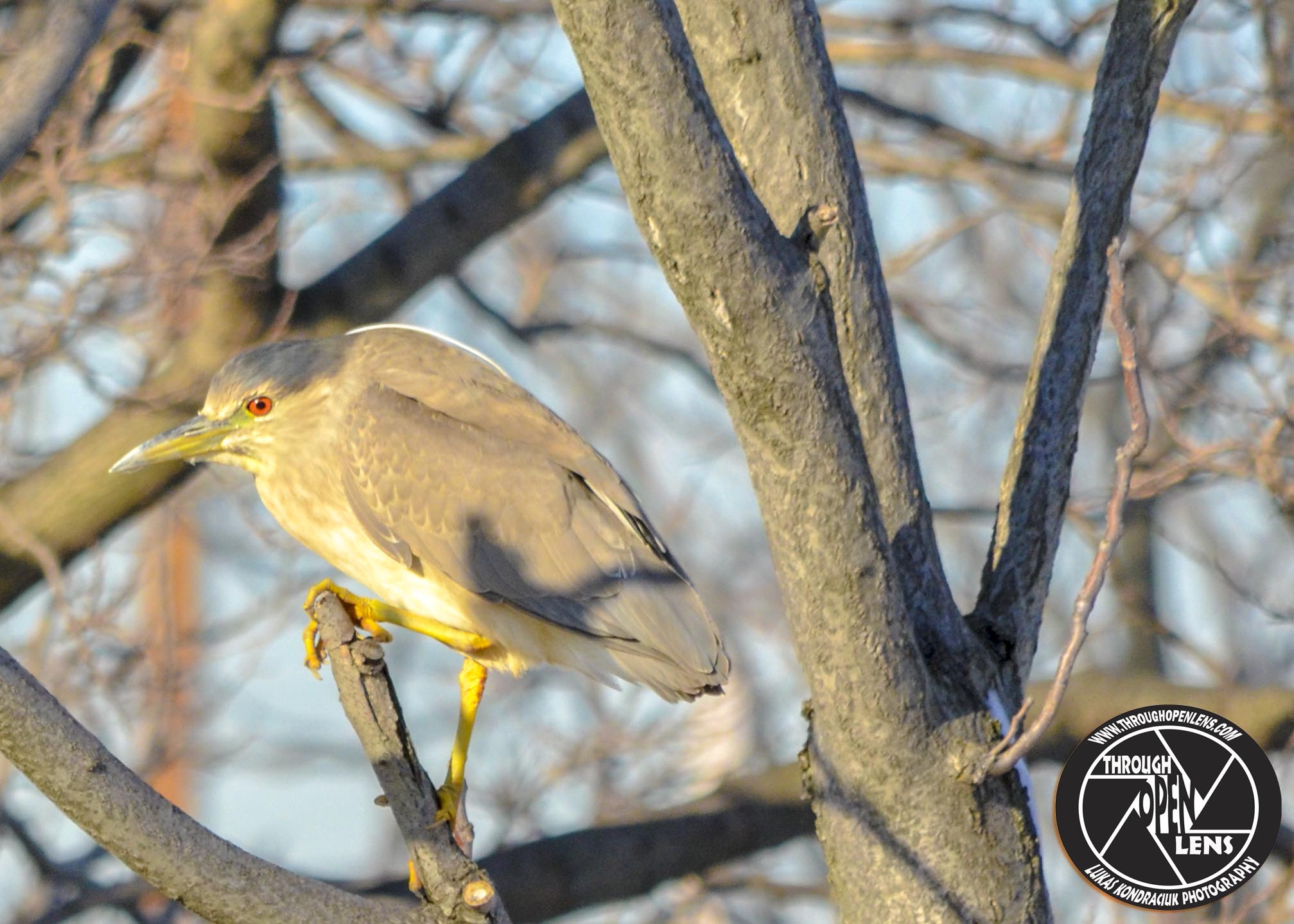
I Solemnly Swear I Am Up To No Good!

F/9.0, 1/125, ISO 320.

Black-crowned Night-Heron

Guest at a restaurant: “I refuse to eat this roast beef. Please call the manager! “

Waiter: “That’s no use. He won’t eat it either.”

Interesting Fact: Black-crowned Night Heron nest in groups that often include other species, including herons, egrets, and ibises. ( https://www.allaboutbirds.org/guide/Black-crowned_Night-Heron )

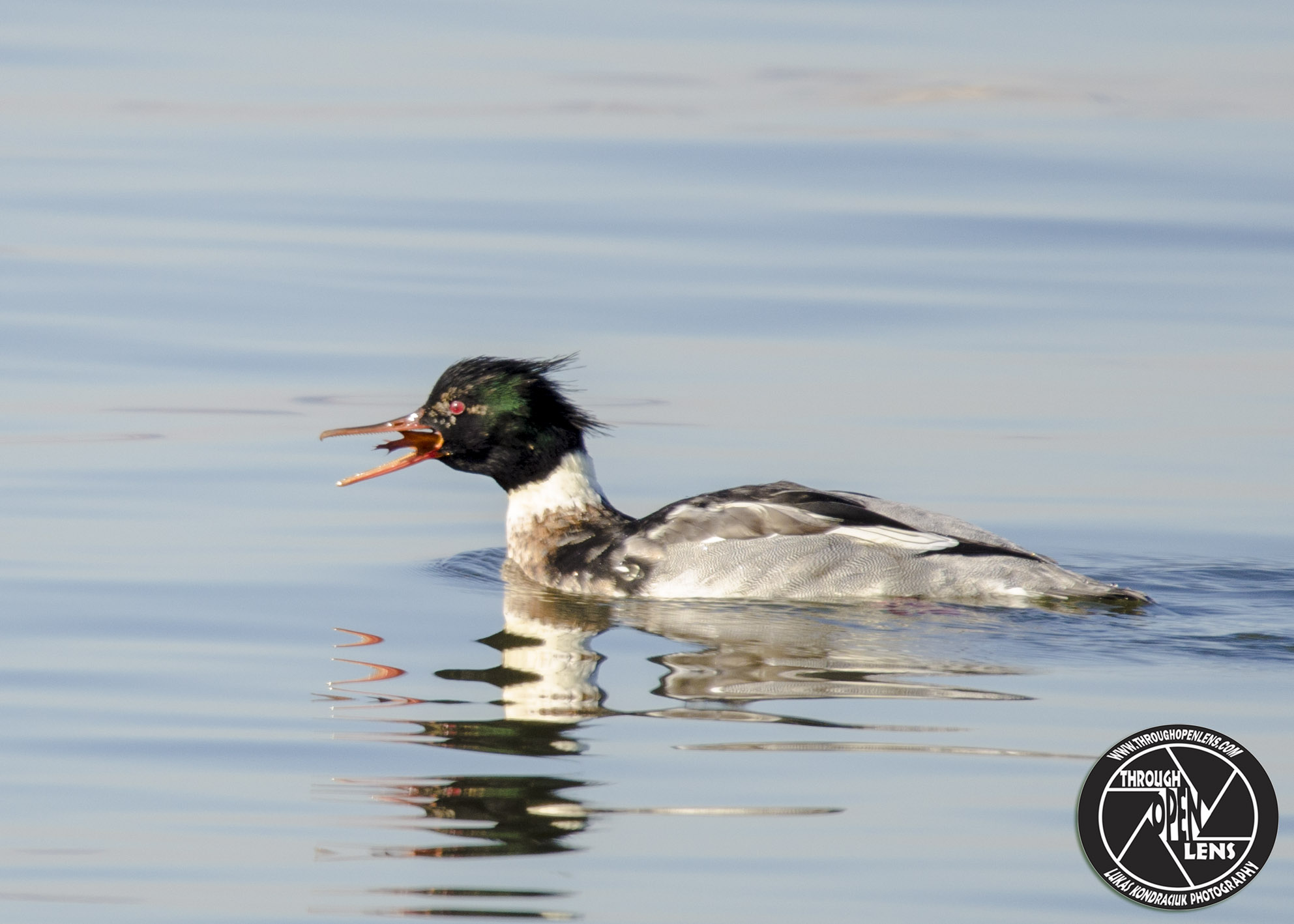
Eat Like No One Is Watching You!

F/6.3, 1/500, ISO 200.

Red-breasted Merganser  

Why do bananas use sunscreen?

Because they peel.

Interesting Fact: The red-breasted merganser (Mergus serrator) is a diving duck, one of the sawbills. The genus name is a Latin word used by Pliny and other Roman authors to refer to an unspecified waterbird, and serrator is a sawyer from Latin serra, “saw”.  ( https://en.wikipedia.org/wiki/Red-breasted_merganser#Behaviour )

Psst… You Can’t See Me

atlantic-ghost-crabs

F/8.0, 1/500, ISO 100.

Atlantic Ghost Crab (Sand Crab)

Did you hear about the crab that went to the seafood disco?

He pulled a muscle

Interesting Fact: The strong hairy legs of this animal make it run very fast and achieve speeds of about 10 miles per hour. This makes this crab the fastest among all crustaceans. ( http://www.animalspot.net/ghost-crab-sand-crab.html )