I’m Chillin’

F/7.1, 1/1600, ISO 640.

Mute Swan ice

Why are ghosts bad liars?

Because you can see right through them!

Interesting Fact: Before or during landing at a breeding site they’ll slap the water with their feet to announce their arrival and alert potential intruders. If another swan approaches members of the pair raise their wings and tuck their neck in a “busking” display to warn them off. Territorial defenses sometimes escalate to fights between males that can end with the dominant bird pushing its rival underwater. ( https://www.allaboutbirds.org/guide/Mute_Swan/lifehistory )



Get My Good Side! Ew

F/7.1, 1/200, ISO 250.

Blue Jay

What did one wall say to the other wall?

Meet ya’ at the corner!

Interesting Facts: This common, large songbird is familiar to many people, with its perky crest; blue, white, gray, and black plumage; and noisy calls. Blue Jays are known for their intelligence and complex social systems, and have tight family bonds. They often mate for life, remaining with their social mate throughout the year. ( https://www.allaboutbirds.org/guide/Blue_Jay/lifehistory )

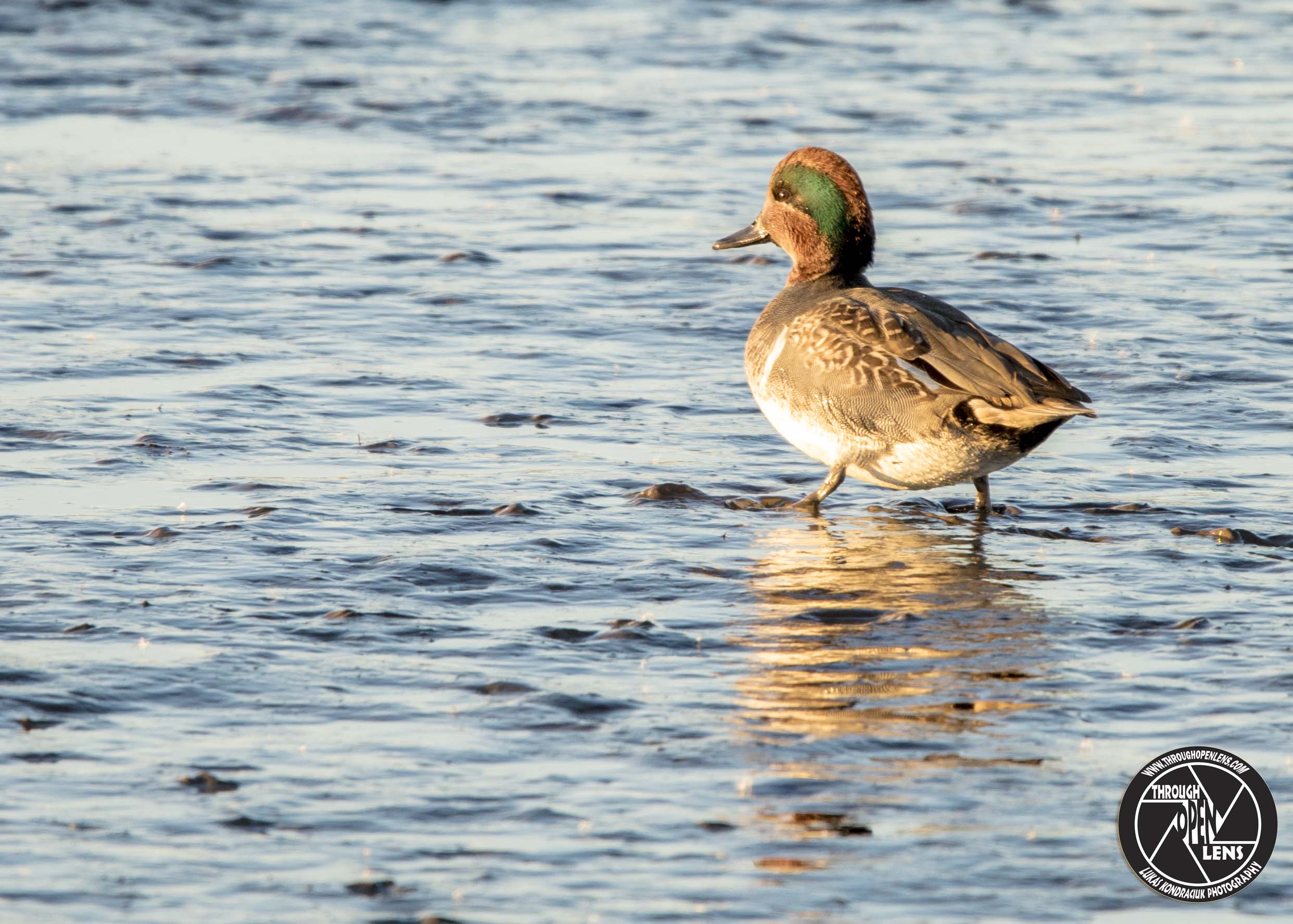
I Walk On Water. What’s Your Superpower!

F/7.1, 1/200, ISO 320.

Green-Winged Teal

Why do writers always feel cold?

Because they have lots of drafts in their office.

Interesting Facts: Green-winged Teal are fast, agile, buoyant flyers. They can take off straight from the water without running across the surface. Though they are dabbling ducks that usually tip up to feed, they occasionally dive for food and to avoid predators. In winter Green-winged Teal gather in roosting flocks of up to 50,000 birds. ( https://www.allaboutbirds.org/guide/Green-winged_Teal/lifehistory )


Be Like A Duck. Remain Calm On The Surface And Paddle Like Hell Underneath.

F/7.1, 1/200, ISO 200.

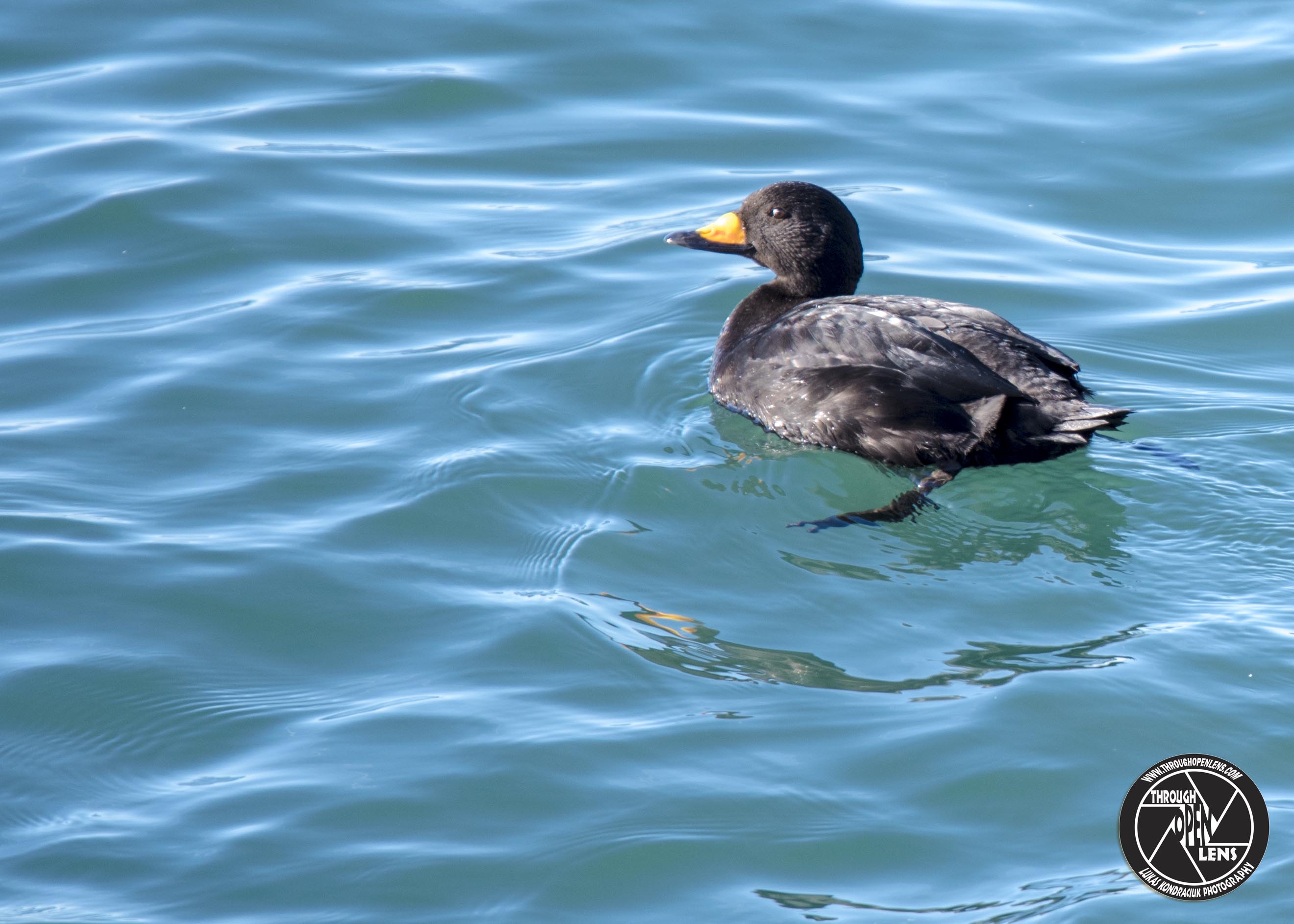
Black Scoter

What did the blanket say when it fell off the bed?

Oh sheet.

Interesting Facts: This species dives for crustaceans and molluscs while migrating or wintering on the sea-coasts, and feeds on insects and their larvae, especially caddisflies, fish eggs and, more rarely, vegetation such as duck weed while nesting on freshwater. It forms large flocks on suitable coastal waters in winter quarters. These are tightly packed, and the birds tend to take off together; in the breeding season they are less social. It has been suggested that in coastal waters this species prefers sheltered embayments, and possibly waters that include some mixed depths. ( https://en.wikipedia.org/wiki/Black_scoter )


I Used To Think I Was Indecisive, But Now I’m Not Too Sure.

F/8.0, 1/250, ISO 250.

Loggerhead Shrike

At a local coffee bar, a young woman was expounding on her idea of the perfect mate to some of her friends. “The man I marry must be a shining light amongst company. He must be musical. Tell jokes. Sing. And stay home at night!” An old granny overheard and spoke up, “Honey, if that’s all you want, get a TV!”

Interesting Fact: The upper cutting edge (tomium) of the Loggerhead Shrike’s hooked bill features a pair of built-in pointy projections, aptly named “tomial teeth.” Like a falcon, the shrike tackles vertebrate prey with a precise attack to the nape, probably using these tomial “teeth” to paralyze the animal with a jab to the spinal cord. ( https://www.allaboutbirds.org/guide/Loggerhead_Shrike )


I Have A Date Tonight, With My Bed. We Are Totally Gonna Sleep Together.

F/8.0, 1/250, ISO 400.

Common Eider ( Female ) 

Where do vegetables go to get drunk?

The Salad Bar.

Interesting Fact: Eiders are colonial breeders. They nest on coastal islands in colonies ranging in size of less than 100 to upwards of 10,000-15,000 individuals.[13] Female eiders frequently exhibit a high degree of natal philopatry, where they return to breed on the same island where they were hatched. This can lead to a high degree of relatedness between individuals nesting on the same island, as well as the development of kin-based female social structures.[14] This relatedness has likely played a role in the evolution of co-operative breeding behaviours amongst eiders. Examples of these behaviours include laying eggs in the nests of related individuals[15] and crèching, where female eiders team up and share the work of rearing ducklings. ( https://en.wikipedia.org/wiki/Common_eider )


It May Look Like I’m Doing Nothing. But In My Head, I’m Quite Busy.

F/9.0, 1/320, ISO 160.

Sandhill Cranes 

Why are baseball players so cool?

They always have their fans there!

Interesting Fact: During migration and winter the family units group together with other families and nonbreeders, forming loose roosting and feeding flocks—in some places numbering in the tens of thousands. Eggs, nestlings, and injured or sick adults may be hunted by foxes, raccoons, coyotes, wolves, bobcats, crows, ravens, eagles, and owls. Cranes attack aerial predators by leaping into the air and kicking their feet forward. They threaten terrestrial predators by spreading their wings and hissing, eventually resorting to kicking. ( https://www.allaboutbirds.org/guide/Sandhill_Crane/lifehistory )


Dont Be Afraid to Stick Your Neck Out!

F/9.0, 1/320, ISO 320.

Ring-necked Duck

Why is it hard for a ghost to tell a lie?

Because you can see right through him.

Interesting Fact:  Ring-necked Ducks feed by diving underwater, rather than by tipping up as “dabbling” ducks do. When diving, they leap forward in an arc to plunge underwater, and they swim using only their feet for propulsion. ( https://www.allaboutbirds.org/guide/Ring-necked_Duck/lifehistory )

Kinda Classy Kinda Hood

F/6.3, 1/500, ISO 220.

Hooded Merganser ( Female )

When is a door sweet and tasty?

When it’s jammed!

Interesting Fact: Unlike dabbling ducks, Hooded Mergansers swim low in the water. Their legs are far back on their bodies, which helps in diving but makes them awkward on land. They take flight by running across the water, flying with fast wingbeats and never gliding until they are about to land (by skidding to a stop on the water). ( https://www.allaboutbirds.org/guide/Hooded_Merganser/lifehistory )


I Give High A New Meaning!

F/13.0, 1/640, ISO 320.

Northern Harrier

What did the eggs say when the cops showed up?

Everybody scramble!

Interesting Fact: Northern Harriers hunt mostly small mammals and small birds, but they are capable of taking bigger prey like rabbits and ducks. They sometimes subdue larger animals by drowning them. ( https://www.allaboutbirds.org/guide/Northern_Harrier )